We have a brand new updated website! Click here to check it out!

Murder suspect who fled to Colorado back in Missouri

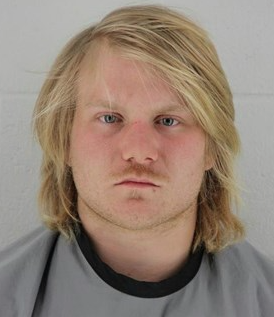
Joshua Koonce- photo Stoddard Co.

DEXTER, Mo. (AP) – A southeast Missouri man charged with second-degree murder is now in custody in Missouri after briefly fleeing to Colorado.

KFVS-TV reports that 31-year-old Joshua Koonce of Dexter is jailed in Stoddard County on $500,000 cash-only bond. Police say Koonce fled to Colorado last month before being captured in Pueblo. He was back in Missouri as of Friday.

Koonce is accused in the stabbing death of 66-year-old Jimmy Lynn Casey of Dexter in June.

Koonce’s father, brother and a third man also faces charges for allegedly aiding Koonce and slowing the investigation.

Influence of organized labor gets big test in Missouri vote

JEFFERSON CITY, Mo. (AP) — On the heels of a U.S. Supreme Court ruling weakening public-sector unions, labor’s clout is being put to a new test by a voter referendum in Missouri over whether the state should ban compulsory union fees in all private-sector workplaces.

The statewide vote in Tuesday’s primary on a so-called right-to-work law could be a watershed moment for unions, if they can halt what has been a steady erosion of strength in states with historically deep-rooted support.

“The timing of this is essential. I think everyone wants to write the labor movement’s obituary,” national AFL-CIO secretary-treasurer Liz Shuler said. But “it’s going to energize and activate us and show that we fight back.”

If they lose that fight, Missouri will become the 28th state with a law that prohibits labor groups and employers from forcing workers to pay mandatory union fees.

The so-called “fair share fees,” which are less than full dues, are intended to cover unions’ nonpolitical costs such as collective bargaining because federal law requires unions to represent even employees who don’t join. Eliminating those fees is expected to reduce unions’ overall finances and potentially their influence.

That’s one reason why unions from across country are engaged in Tuesday’s vote. Heading into the final week of campaigning, a labor-led group already had spent over $15 million against Proposition A, outspending supporters by a more than 3-to-1 margin.

The issue has become highly partisan in recent years.

Most state right-to-work laws were enacted shortly after they were permitted by the 1947 federal Taft-Hartley Act. But there’s been a recent surge of such laws as Republicans have strengthened their hold on state governments, starting with an Indiana law in 2012 and followed by ones in Michigan, Wisconsin, West Virginia and Kentucky.

Labor unions typically support Democratic candidates. In states where they remain strong, such as California, they sometimes are seen as having undue influence over Democratic lawmakers and governors.

Missouri’s Republican-led legislature and governor enacted a right-to-work law in 2017, but it never took effect because unions gathered enough petition signatures to force a referendum — essentially giving voters a chance to veto it.

The vote originally was planned for November but was switched by GOP lawmakers to the August primary in a maneuver that prevented an anticipated heavy union turnout from coinciding with Republican efforts to unseat Democratic U.S. Sen. Claire McCaskill.

Tuesday’s vote comes amid uncertainty about the future of organized labor in the U.S. In late June, the U.S. Supreme Court ruled that an Illinois state government worker could not be forced to pay collective bargaining fees to a union, essentially establishing a right-to-work policy for public-sector workers in all states.

That decision turned the spotlight to Missouri as the first place where voters subsequently will decide whether to enact a similar ban for private-sector unions.

“It’s the next battle, if you will, in this ongoing fight to end compulsory unionism in America,” said Mark Mix, president of the National Right to Work Committee, which backed the Illinois lawsuit.

As of late July, the National Right to Work Committee had spent about $2.2 million on behalf of Missouri’s ballot measure, nearly half the total amount spent by supporters.

Proponents and opponents have combined to spend more than $20 million on Proposition A, even though union members comprised just 8.7 percent of Missouri’s workforce last year and 10.7 percent nationally. Missouri’s private-sector unionization rate of 7.5 percent was a percentage point higher than the national average.

Many of Missouri’s top unionized employers — including The Boeing Co. and Ford Motor Co. — have taken no position on Proposition A. But unions that represent their employees have helped canvass neighborhoods, put up yard signs and make phone calls in opposition to it.

“Prop A is nothing but a tool for the large corporations to be able to take away the power of the unions to negotiate fair, respectful wages,” said Stephen McDerman, president of the International Association of Machinists and Aerospace Workers District 837, which represents many Boeing employees.

K&S Wire Products Inc., a non-union manufacturer that employs about 110 people in Neosho, in the state’s southwest corner, is one of the few businesses to directly contribute to the campaign for the ballot measure.

“If you treat your employees right, just like if you treat your children right, they don’t need to go find somebody else to represent them as mommy and daddy,” said K&S President Gene Schwartz, whose company gave $7,500 to Missourians for Freedom to Work.

The advertising campaigns for and against the referendum have generally focused on economics, with supporters claiming that right-to-work policies lead to more jobs and opponents claiming they drive down wages.

Studies have found mixed and sometimes conflicting results.

The Washington-based Economic Policy Institute, which opposes right-to-work, found that wages in right-to-work states average 3.1 percent less than elsewhere after accounting for other workforce differences such educational backgrounds, racial composition, the industrial makeup of employers and the cost of living. For someone earning $40,000 annually, that would mean $1,240 less per year.

“By deliberately creating a ‘free-rider’ problem for unions, right-to-work starves unions and thus starves their ability to boost wages for workers,” said Heidi Shierholz, the institute’s senior economist and policy director.

A study by economists Ozkan Eren of Louisiana State University and Serkan Ozbeklik of Claremont McKenna College in California used data from states with similar characteristics to analyze the effect of right-to-work in Oklahoma. It was the last state to adopt such a law by a statewide ballot measure, in 2001.

The researchers found the law resulted in a significant reduction in private-sector unionization rates but had no short-term effect on either the total unemployment rate or average private-sector wages.

The study noted that Oklahoma had comparatively low unionization rates even before right-to-work.

Nationwide union membership rates have been steadily falling for decades and are now less than half what they were in 1978, when Missouri voters last defeated a right-to-work proposal.

If unions help defeat it again, Missouri Chamber of Commerce and Industry President Dan Mehan said supporters simply would “come back and reload on it when the time is right.”

But labor leaders hope Missouri will become “like a wall” that reverses the direction of the right-to-work movement. Shuler, the AFL-CIO secretary-treasurer, said unions have been discussing the potential of launching ballot initiatives in other states to repeal existing right-to-work laws.

“We should use that opportunity to actually get out of this crouch — or the defensive posture — and go on offense,” she said.

Discover nature with MDC at State Fair Aug. 9-19

Visit MDC’s Conservation Building at the Missouri State Fair Aug. 9-19 to see live fish and other native wildlife such as snakes, turtles, and amphibians. Photo courtesy MDC.

SEDALIA, Mo. – Discover nature with the Missouri Department of Conservation (MDC) at the Missouri State Fair in Sedalia Aug. 9-19.

According to a press release, visitors can go to the MDC’s Conservation Building from 9 a.m. to 7 p.m. Aug 9-18 and 9 a.m. to 6 p.m. Aug 19 to see live fish and other native animals such as snakes, turtles, and amphibians. Learn about and see displays of native plants that help butterflies and other important pollinators.

MDC’s air-conditioned Conservation Kids’ Discovery Room will be open between 10 a.m. and 6 p.m. and features hands-on fun discovering nature through crafts and other activities.

Enjoy these free conservation-related programs at MDC’s outdoor pavilion:

  • WATCH RAPTORS: See a live eagle and other birds of prey up close at the Raptors of Missouri presentation Aug. 9 and Aug. 18 at 11 a.m.1:30 p.m., and 4 p.m.
  • LEARN TO CLEAN AND COOK FISH: Learn how to prepare a fresh catch at the Fish Cooking and Cleaning demonstration Aug. 10 and Aug. 11 at 11 a.m. and 1:30 p.m.
  • MUSHROOM ID: Learn about Missouri mushrooms Aug. 16 at 11 a.m. and 1:30 p.m.
  • HISTORIC SAWMILL: See a working model sawmill in operation at Forest Products: The Circular Sawmill Aug. 17 at 11 a.m. and 1:30 p.m.
  • DUTCH OVEN DEMO: Learn about Dutch oven cooking and watch a live demonstration on Aug. 19 at 11 a.m. and 1:30 p.m.

Don’t miss the special program, “Invasive Species: Stop the Invasion. Join the Fight,” Aug. 10 from 10 a.m. to 2 p.m. next door to the outdoor pavilion at the Missouri Department of Transportation Highway Gardens. It will include displays and activities on invasive plants and animals and how they harm native species and habitats, as well as Missouri’s agricultural, roadsides, and our backyards.

Former corrections officers side with Missouri inmate’s appeal

COLUMBIA, Mo. (AP) – Nearly two dozen former corrections officers from across the country have filed a court brief in support of a Missouri death row inmate’s claim that his medical condition could cause an unconstitutionally cruel execution.

Russell Bucklew-Mo. Dept. of Corrections

Russell Bucklew was sentenced to death in 1997 for killing a southeast Missouri man. He has been scheduled for execution twice but was granted a stay each time. His case is before the Missouri Supreme Court.

Bucklew has a rare condition called cavernous hemangioma, which causes blood-filled tumors in his neck and head.

The Columbia Tribune reports that several briefs were filed on Bucklew’s behalf, including one from 23 former corrections officers who turned death penalty opponents. They say the high-risk execution places an unfair burden on corrections workers involved in the process.

UPDATE: Body of 5-year-old recovered from the Kansas River

DOUGLAS COUNTY —On Saturday morning, members of the Douglas County Search and Recovery Dive Team recovered the body of a five year old child that was believed to be the third passenger in the vehicle that entered the river Friday, according to Officer Drew Fennely.

No one else is believed to have been in the vehicle, and the recovery operation in the river was completed.

On Saturday morning, authorities were unable to provide an update on the condition of the one-year-old or the adult female pulled from the river Friday. The investigation into this incident is ongoing, according to Fennely.

————

DOUGLAS COUNTY —First responders were on the scene of a water rescue Friday afternoon in Douglas County.

First responders on the scene Friday in Lawrence-photo courtesy KCTV

Just after 1:15 p.m., emergency personnel responded to the south bank of the Kansas River, northwest of the intersection of 6th Street and Vermont Street, for reports of a vehicle in the river, according to officer Drew Fennely.

Officers with the Lawrence Police Department arrived on scene and immediately entered the water to assist the occupants of the vehicle. Officers were able to locate an adult female in the water, and assisted her to the bank of the river. Officers also located a small child in the water and assisted the child out of the river. Both individuals were transported to local hospitals, where they continue to be treated. No update on their condition is available at this time.

Information was received that indicated there may be another occupant inside the vehicle. Officers assisted personnel from Lawrence-Douglas County Fire and Medical in attempting to locate the vehicle in the water. After unsuccessful attempts to locate any other occupants, the Douglas County Search and Recovery Dive Team was called in to assist in locating the vehicle and any other occupants. Friday evening, the vehicle was retrieved from the river, but no other occupants were inside the vehicle at the time of recovery. Investigators still believe there was another occupant in the vehicle at the time it entered the river.

Due to diminishing and unsafe light conditions, search and recovery efforts were discontinued for the night. Officers will remain on scene overnight, and the public is asked to avoid the area. Saturday morning, search and recovery personnel will return to the scene to continue recovery operations for any additional vehicle occupants. No timeline can be established for how long the recovery effort will take.

The investigation into the incident is ongoing at this time. It would be premature to speculate whether or not this was an intentional act, as investigators work to determine the events leading up to the vehicle entering the river. Further updates will be provided on Saturday as they become available.

———–

DOUGLAS COUNTY -First responders were on the scene of a reported water rescue Friday afternoon in Douglas County 

At 1:15 p.m., a vehicle was reported to be in the Kansas River near 6th street and Massachusetts in Lawrence, according to Officer Drew Fennelly. Emergency responders pulled two individuals from the water and they were transported to area hospitals.

Information received indicates there may have been additional occupants in the vehicle, according to Fennelly. Dive team personnel were on the scene assisting.

No additional details were released.


‘RRT’s Greatest Hits’ to showcase songs from the past 39 years

The Robidoux Resident Theatre in St. Joseph will be showcasing its greatest hits next weekend.

RRT’s Greatest Hits is a fundraising event to help with remodeling costs of the Ruby Theatre, which will be the new home for the Robidoux Resident Theatre.

RRT’s Greatest Hits will feature songs from performances over the past 39 years.

Mike Pittman with the Robidoux Resident Theatre said people from around the country are planning to come back to take part in the event.

“We have people coming from the West Coast, from Colorado, Texas, different areas of the country where they’ve gone out and ended up and they’re going to come back and join the people in our community and Kansas City who are coming back to perform songs from the shows that they were in,” Pittman said.

RRT’s Greatest Hits will be held at 7:30 p.m. on Saturday, August 11th, at the Missouri Theatre in St. Joseph.

For more information or tickets, click here or call (816) 232-1778.

Aligning What Kansas Candidates For Governor Say With The Facts

Truth, it’s said, is the first casualty of war. That helps explain why combat metaphors so often get applied to political campaigns.

The battlefield of the Kansas governor’s race bears out the maxim. Even when candidates get their facts right — a surprisingly difficult task for the field — their words tend to twist a broader truth.

So we’ve run through some of the lines the governor hopefuls commonly trot out and tested where they get it right, and how they often tell voters something that just isn’t so.

What would be the impact of charging out-of-state tuition to immigrants who are in the country illegally but grew up in Kansas?

Only 670 students who are in the country illegally pay in-state tuition in Kansas. Hiking their rates — doubling or tripling their tuition — might improve the finances of state colleges and universities by a marginal amount.

But that price increase could have the unintended effect of driving many of those students out of school. After all, the out-of-state rate is sometimes double or triple the cost and those students are ineligible for federal student aid.

So if they left, that could drive up tuition for the people left behind.

If the vast majority of those immigrant students found a way to pay for far steeper tuition — a scenario implied with some campaign talk — it might lower the tuition for others.

But Kansas universities are eager to keep all the students they can. Even students attending public colleges and universities at discounted in-state rates generate badly needed tuition. Almost any drop in enrollment spreads campus costs among a smaller student body.

Gov. Jeff Colyer and Secretary of State Kris Kobach, the leading candidates in the Republican primary, want to end in-state tuition for immigrant students in the country illegally.

Kris Kobach

A fiscal note signed by Colyer’s chief budget officer, Larry Campbell, says that charging those students the out-of-state rate would raise about $2.3 million in tuition. (In a television ad, Kobach inflates that figure to $4 million.)

That $2.3 million assumes all those students would stay enrolled.

“Some would say, well, they just won’t go, as opposed to paying the higher rate,” said Blake Flanders, president of the Kansas Board of Regents.

How pro-gun or anti-gun are the leading Democratic candidates for governor?

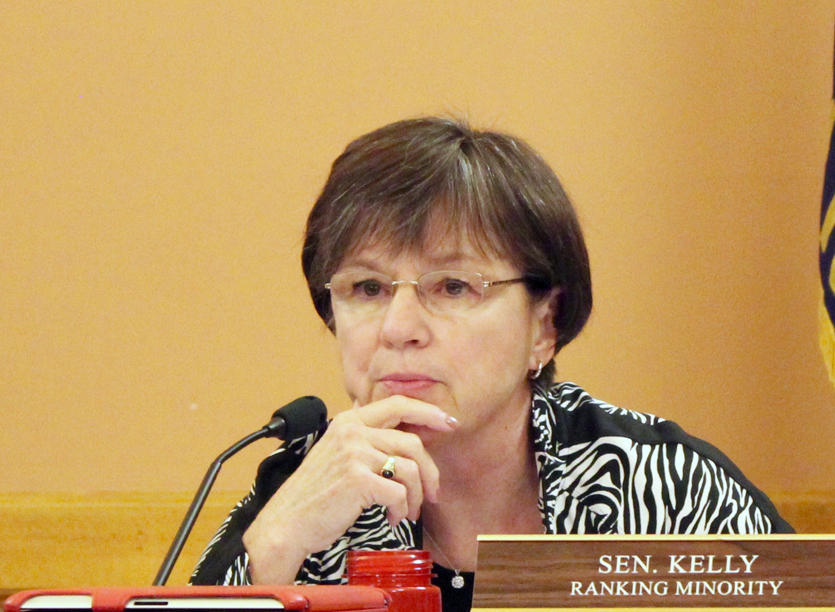
Former state agriculture secretary and state lawmaker Josh Svaty and state Sen. Laura Kelly both have a long history of voting for stronger gun rights in the Kansas Legislature. Their records, and campaign positions, have been more mixed recently.

Carl Brewer
CREDIT FILE PHOTO / KANSAS NEWS SERVICE

But a statement about Svaty and Kelly by Carl Brewer, another Democrat in the race, is, at best, dated.

A Brewer a campaign ad says both have “A” ratings from the National Rifle Association. That was true once, but not now. Today, they each have an “F.” The NRA itself doesn’t consider those past ratings relevant, but they remain visible on Vote Smart, a non-partisan organization that tracks votes and endorsements.

Svaty got an “A” rating in 2004, 2006 and 2008. Kelly got an “A” in 2008.

Josh Svaty
CREDIT FILE PHOTO / KCUR

Svaty has attacked Kelly’s sponsorship of the 2015 constitutional carry law, under which Kansans who want to pack a hidden weapon no longer need a concealed carry permit.

Laura Kelly scorecard
CREDIT VOTE SMART

Josh Svaty scorecard
CREDIT VOTE SMART

“We should have stopped this when we had the chance (in) 2015,” Svaty said, “and we needed Democrats that knew that then and knew enough to stand up say no.”

Svaty was not in the Legislature in 2015.

Kelly has expressed regret over the law. “It became very clear that we went too far,” she said at a debate in Wichita.

She has more recently voted to curtail gun rights, including a vote this year against a bill that would have allowed 18-to-20-year-olds to conceal and carry a weapon without a permit.

Laura Kelly
CREDIT FILE PHOTO / KANSAS NEWS SERVICE

When Svaty was in the Legislature, he cast the same votes as Kelly to expand gun rights, including one law that restricted how much local governments could regulate firearms.

Who’s paying for new school buildings?

Kobach recently described some administrative buildings as “Taj Mahals.” He called out Shawnee Mission in particular:

“There’s one in Shawnee Mission, people call it the ‘Crystal Palace.’ I think it was $24 million. It looks like a corporate headquarters. I have no idea what those people are doing in there. They’re probably on their phones playing games.”

It turns out Kobach low-balled the expense — that building actually cost $32.5 million — even as he mischaracterized what’s happening inside. It holds more than administrators. About half of it is used for career programs such as bio-technology and engineering.

But his statement also seems to imply that state money was used to build it — taxes collected in Emporia or Dodge City or Salina. The dollars all came from local property taxes, because Shawnee Mission is wealthy enough that it doesn’t qualify for matching state aid for its construction. But less wealthy districts do, and the state is spending more on that year by year.

Is the number of school administrators growing faster than the number of classroom instructors?

Administrative and teaching jobs have both climbed in recent years, but just how much depends on how you count.

Kobach describes a trend that doesn’t appear to match with any accounting we could find.

“Over the past 20 years, I’ll try to remember the numbers exactly. I think the number of teachers in the state has increased 16 percent. The number of administrators, 38 percent.”

We don’t know how Kobach is defining “teachers” and “administrators.” His campaign hasn’t answered repeated requests about the claim and about his source on these figures.

The Kansas News Service attempted a few calculations using personnel breakdowns from the state education department.

The number of teachers is up 11 percent (we excluded librarians, counselors, teachers aides and others who work with children in schools) over the last two decades.

The number of administrators jumped 25 percent — if we count district and school building leaders and all district “manager” or “director” positions. There are fewer superintendents and principals today because schools and districts keep closing and consolidating. But the number of directors, coordinators and supervisors for things such as food service, maintenance and instruction has mushroomed. Twenty years ago “technology director” wasn’t even listed in schools data, for obvious reasons. Today there are 250.

Because Kobach has made repeated campaign statements about spending outside the classroom being excessive, we also tried slicing the data a different way: the change in classroom personnel versus non-classroom personnel. Classroom personnel (we included teachers, teacher aides and special education aides) rose 19 percent. Non-classroom personnel (everyone else) increased 12 percent.

Over the past 20 years, student enrollment rose 4 percent.

Has KanCare, the state’s privatized Medicaid program, saved money and improved health care?

At best, we’ve got more opinion on the matter than hard data.

As lieutenant governor to Brownback, Colyer spearheaded the administration’s controversial 2013 overhaul of Medicaid.

Not surprisingly, then, the Johnson County plastic surgeon touts the program as something that cut costs and improved the quality of care.

At a June candidate forum in Parsons, Colyer said privatization had saved $2 billion over five years.

Jeff Colyer
CREDIT FILE PHOTO / KANSAS NEWS SERVICE

“That’s what we saved Kansas taxpayers by reforming Medicaid, according to an independent study,” he said.

The 2017 study, paid for by the companies that manage KanCare, said privatization had reduced the projected growth of Medicaid costs by $1.7 billion. So, the governor rounded up $300 million.

But a report released several months later by state auditors called that and other claims into question. It said that incomplete data obscured the extent to which KanCare had lowered costs and improved the quality of care provided to the more than 400,000 Kansans covered by the program.

“These data issues limited our ability to conclude with certainty on KanCare’s effect on service use and limited our ability to interpret cost trends,” the auditors wrote. “More significantly, data reliability issues entirely prevented us from evaluating KanCare’s effect on beneficiaries’ health outcomes.”

State officials charged with overseeing KanCare disputed some of the auditors’ conclusions but acknowledged the need to improve the data on costs and patient outcomes.

Celia Llopis-Jepsen is a reporter for the Kansas News Service. You can reach her on Twitter @Celia_LJ

Jim McLean is managing director of the Kansas News Service. You can reach him on Twitter @jmcleanks.

Stephan Bisaha reports on education for KMUW in Wichita and the Kansas News Service. Follow him on @SteveBisaha.

Death sentence sought for NE Kan. woman’s rape, murder

OLATHE, Kan. (AP) — Johnson County prosecutors say they will seek a death sentence for a 24-year-old man charged with raping and killing an Overland Park woman.

Korrey Raine White Rinke-photo Johnson Co.

Korrey Rinke is charged with capital murder in the August 2016 killing of 46-year-old Julianna Pappas.

Rinke is accused of raping Pappas, beating her to death and leaving her body in a wooded area.

Rinke was arraigned on rape and capital murder charges Thursday afternoon in Johnson County District Court. His attorneys entered not guilty pleas on his behalf.

Appeals court strikes down 2013 change to Kan. workers comp law

TOPEKA, Kan. (AP) — The Kansas Court of Appeals has struck down as unconstitutional a 2013 change in the state’s workers’ compensation law.

A three-judge panel ruled Friday that the change approved by the Legislature in 2013 too severely limits an injured worker’s right to obtain a legal remedy for an injury.

Kansas Attorney General Derek Schmidt’s office did not immediately say whether it plans to appeal to the Kansas Supreme Court.

The case involved Howard Johnson III, who injured his back while working at U.S. Food Service in 2015.

His injury occurred after the change took effect on Jan. 1, 2015. The revised law used a version of an American Medical Association guide which greatly reduced the amount of settlements workers could be awarded.

Northwest breaks ground on farmhouse through partnership with Maryville School District

Representatives of Northwest, its School of Agricultural Sciences and the Maryville R-II School District turn dirt on the site of a new farmhouse to be built at the R.T. Wright Farm. Photo by Todd Weddle/Northwest Missouri State University.

MARYVILLE, Mo. – Northwest Missouri State University broke ground Wednesday evening on a new farm manger’s house at its R.T. Wright Farm.

The groundbreaking advances a collaborative project with the Maryville R-II School District and setting the stage for other enhancements on the farm property to fuel the advancement of the University’s ag programming.

“This is such an important step forward for the agriculture program,” Northwest Provost Dr. Jamie Hooyman said. “With the intentional bridge that we’re building between this ag campus and our main campus, the farmhouse will be a visual example of how strongly this University feels about supporting, investing and believing in the agricultural industry.”

Northwest is partnering with the Maryville school district’s Northwest Technical School to construct the 1,300-square-foot home on the Wright Farm, which is located at Highway 71 and Icon Road, about two miles north of Northwest’s main campus.

The new home will be constructed just north of the Wright Farm’s existing house, which will be demolished, and consist of three bedrooms, two bathrooms and a two-car garage with an open floor concept and full basement. Excavation is scheduled to begin the week of Aug. 6 and framing will start in September. Completion of the house is anticipated next May.

Wednesday’s groundbreaking is a key step in several enhancements planned for the Wright Farm as the School of Agricultural Sciences continues to experience rapid growth with an enrollment that has swelled by 53 percent in the last seven years and is expected to increase again this fall.

Through an additional $1 million investment, Northwest is working to improve the “front door” of the Wright Farm, an active 448-acre farm that is home to beef, swine, dairy and sheep enterprises as well as row and forage crops. Improvements slated for the coming year include enhancements to the roadway, entrance, signage and fencing.

The University’s top priority for the Wright Farm, however, is an $8.5 million Agricultural Learning Center. The 29,000-square foot, multi-use building will allow for research and scholarly activities centered on crop, soil and livestock resources as well as space for processing agricultural products. It will include space for public and private functions such as producer and agricultural industry meetings, workshops, shows and career development events, and the promotion of agricultural literacy.

For more information about Northwest’s School of Agricultural Sciences, visit nwmissouri.edu/ag.

Copyright Eagle Radio | FCC Public Files | EEO Public File