WICHITA, KAN. – An Kansas EMT is charged with stealing morphine from vials, according to U.S. Attorney Stephen McAllister.
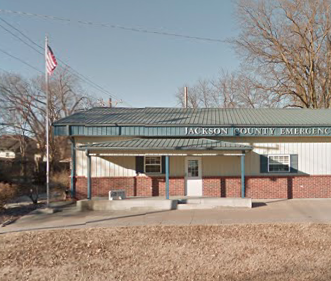
Jackson County EMS google image
Colby W. Vanwagoner, 32, Mayetta, Kan., is charged with two counts of tampering with consumer products and one count of making a false statement to federal investigators. A grand jury indictment returned April 26 and unsealed May 2 alleges the crimes took place while Vanwagoner was working for the Jackson County Emergency Medical Service in Holton, Kan.
The indictment alleges Vanwagoner tampered with vials of morphine sulfate. It is alleged he replaced morphine with saline solution and put the vials back into narcotic boxes on ambulances or in office stocks. Tests showed the concentration of morphine in vials that had been tampered with was low as 1 percent or less.
If convicted, he faces up to 10 years in federal prison and a fine up to $250,000 on the on the tampering charges and up to five years and a fine up to $250,000 on the charge of lying to investigators. The Food and Drug Administration – Office of Criminal Investigations investigated. Assistant U.S. Attorney Debra Barnett is prosecuting.
House and Senate negotiators struck a tentative deal Wednesday to prevent changes in federal tax law from ratcheting up state taxes for Kansans.
If lawmakers don’t act, changes in federal tax filing could trigger an increase in state income taxes for some Kansans. FILE / CREATIVE COMMONS-FLICKR
The Senate wanted broader tax cuts in the same bill, but couldn’t coax the House team to go along.
Rep. Steve Johnson, who chairs the House tax committee, said his chamber didn’t want to go beyond addressing the federal impact in ways that would produce deeper cuts to state government revenue.
“It’s all of the tax cuts and these targeted tax cuts that have given us heartburn,” he said.
Legislative staff and the Kansas Department of Revenue estimate the bill now on the table would cost the state about $80 million in revenue for the fiscal year that starts in July.
After Congress’ overhaul of taxes last year, it seemed some Kansans would end up paying more to the state because of changes to deductions and itemizing.
Legislative leaders want to avoid that by ensuring those Kansans can still itemize on state tax returns. The Senate pushed through a bill to that effect last month, arguing the state couldn’t, in good conscience, profit from the federal reforms.
“The surplus from this unanticipated windfall,” Republican Senate President Susan Wagle urged, “should be returned to the Kansas taxpayers.”
But the Senate wanted tax cuts for Kansans beyond that. Its bill raised the standard deduction and fully reinstated deductions for mortgage interest, property taxes and medical expenses.
Senate negotiator Caryn Tyson, who is running for Congress, argued that after the Legislature passed a two-year $1.2 billion hike last year, raising the standard deduction would help all Kansans now looking at larger tax bills.
But with the state recovering from years of fiscal woes and facing pressure from the Kansas Supreme Court to increase funding for public schools, the House balked at that idea.
Ultimately senators backed down on the standard deduction during Wednesday’s negotiations. They compromised with the House, too, on restoring the mortgage interest and other targeted deductions immediately. Instead those will be phased in.
Stephen Koranda is Statehouse reporter for KPR a partner in the Kansas News Service. Follow him on Twitter @kprkoranda.
Celia Llopis-Jepsen is a reporter for the Kansas News Service You can reach her on Twitter @Celia_LJ.
DOUGLAS COUNTY — Law enforcement authorities are investigating an armed robbery and have a suspect in custody.
Just before 11:30 a.m. Wednesday, police attempted to perform a traffic stop in north Lawrence on a green Dodge pickup driven by a suspect believed to have committed a previous armed robbery, according to Sgt. Amy Rhoads.
The driver, identified as 29-year-old Theoplis Lee Ellis of Kansas City fled southbound on 2nd Street toward downtown Lawrence. Police decided to terminate the pursuit due to safety concerns.
At approximately 12:43 p.m. the same vehicle was observed westbound on 7th Street from the downtown area. Officers swarmed the area to locate the vehicle, and witnesses reported seeing the vehicle driving recklessly on Iowa Street and attempted to stop the vehicle, but it fled southbound.
The driver then entered Kansas 10 eastbound from Iowa Street, with officers pursuing. Somewhere between Michigan Street and Louisiana Street the suspect vehicle left the highway to the south and officers lost sight of the vehicle as it traveled off road.
A county deputy in the area then located the vehicle a short time later, wrecked down an embankment in the area near where E 1400 Road crosses the Wakarusa River.
Deputies located and took Ellis into custody. He was transported to an area hospital for treatment of non-life-threatening injuries sustained in the crash.
During the pursuit, a police vehicle was involved in a collision at 25th Street and Iowa Street. Initial information indicates the marked police vehicle was southbound on Iowa Street, involved in the pursuit, when an eastbound vehicle entered the intersection. The two vehicles collided. The driver of the other vehicle was transported to an area hospital for treatment of minor injuries. The officer involved was not injured. The department’s Accident Investigations Unit is conducting the investigation into the crash.
AVA, Mo. (AP) – A 69-year-old Missouri woman is charged with first-degree murder in her husband’s death.
The Douglas County Sheriff’s Office says Glenda Mason Young, of Ava, was arrested Monday after a grand jury indicted her in the January 2017 death of 61-year-old David Raymond Young.
David Young was found dead at the couple’s home near the unincorporated town of Squires.
Authorities have not said how the victim died or what evidence led to his wife’s arrest.
She is currently being held in the Douglas County Jail on a $200,000 bond.
Online court records don’t show an attorney for Young.
KANSAS CITY (AP) – A Honduran man has admitted in federal court in Kansas City that he entered the U.S illegally for the 11th time.
Federal prosecutors say 33-year-old Jose Salazar-Aguilar pleaded guilty Wednesday. It was his second conviction for illegally entry into the country.
He faces a sentence of up to 20 years in prison because he already was a convicted felon.
Salazar-Aguilar was arrested in February 2017 in Kansas City for drunken driving and resisting arrest. After he was released on bond, he was arrested by federal agents.
He also has previous convictions for delivery and possession of a controlled substance and forgery.
Prosecutors say he was last deported from the U.S. in August 2013.
TOPEKA, Kan. (AP) — Kansas Gov. Jeff Colyer issued an executive order Wednesday to prevent state agencies from automatically disqualifying ex-criminals from thousands of state jobs.
The new “ban the box” policy will prevent agencies from requiring people seeking many jobs to disclose whether they’ve had a past criminal conviction. The order applies to about 20,000 state jobs in agencies under Colyer’s direct control.
The Republican governor said the order will make it easier for former inmates to find work after their release from state prisons or county jails, so that they will be less likely to commit new crimes. State agencies still will be able to ask applicants about past criminal convictions during interviews, and the order does not cover jobs that cannot legally be filled by people with criminal convictions.
“Given the time and opportunity, those offenders who have jobs live better lives and become a full member of our community,” Colyer told reporters during a Statehouse news conference.
Thirty-one other states have “ban the box” policies for government hiring, according to the National Employment Law Project, which supports them. Also, Wichita, Topeka and Kansas City, Kansas, have enacted their own policies.
Colyer’s actions drew praise from Koch Industries, the Wichita-based energy conglomerate, and legislators from both parties joined the governor for his news conference.
“This measure will allow individuals to get their foot in the door, to get that interview,” said state Sen. Oletha Faust-Goudeau, a Wichita Democrat who has advocated such policies. “I have heard from individuals that they know that their application has been tossed in the trash and they don’t get that opportunity.”
Rep. Gail Finney, another Wichita Democrat, introduced a bill last year that would prevent state and local government agencies from asking about an applicant’s criminal history until the applicant received a conditional job offer. The House Judiciary Committee had a hearing on the measure but never voted on it.
“We believe in forgiveness, and we believe in new beginnings and fresh starts,” said Senate President Susan Wagle, a Wichita Republican. “I think this is going to lead to legislation that does the same thing.”
But Colyer’s willingness to issue a “ban the box” order when lawmakers have failed to pass a law contrasts with his lack of action on banning discrimination against LGBT applicants and workers in state hiring and employment decisions.
Former Democratic Gov. Kathleen Sebelius, later U.S. health and human services secretary, issued such an executive order in 2007. Former conservative Republican Gov. Sam Brownback, an opponent of same-sex marriage, rescinded the directive in 2015 and said such a policy should be set by the Legislature, not through an executive order.
Colyer said his administration won’t condone discrimination and, “If there’s an issue out there, we’re happy to deal with it.”
“This is an opportunity for people to be reintegrated into society and to get a job,” Colyer said.
WASHINGTON (AP) — White House lawyer Ty Cobb will retire at the end of the month, the White House said Wednesday, further shaking up President Donald Trump’s legal team as the president intensifies his attacks on the special counsel’s Russia investigation.
Cobb-photo courtesy Hogan-Lovels
Cobb, the White House point person on special counsel Robert Mueller’s investigation, informed White House chief of staff John Kelly last week that he would retire at the end of May. White House press secretary Sarah Huckabee Sanders said Cobb had been discussing the decision for “several weeks.”
Cobb did not personally represent the president, but he was a key adviser, coordinating the administration’s dealings with Mueller. His retirement comes as the president’s personal legal team has been negotiating the terms of a possible sit-down between Trump and prosecutors.
It also comes a day after one of Trump’s former personal attorneys, John Dowd, confirmed to The Associated Press that Mueller’s team in March raised the prospect of issuing a grand jury subpoena for Trump, an extraordinary idea that would seek to force a sitting president to testify under oath.
Dowd said Mueller’s team broached the subject during a meeting with Trump’s legal team while they were negotiating the terms of the possible interview with the president.
Dowd himself left Trump’s legal team more than a month ago.
It was not immediately clear in what context the possibility of a subpoena was raised or how serious Mueller’s prosecutors were about such a move. Mueller is probing not only Russian election interference and possible coordination with Trump associates but possible obstruction of justice by Trump.
Trump lashed out against the investigation in a familiar fashion Wednesday, saying on Twitter: “There was no Collusion (it is a Hoax) and there is no Obstruction of Justice (that is a setup & trap).”
Even if Mueller’s team decided to subpoena Trump as part of the investigation, the president could still fight it in court or refuse to answer questions by invoking his Fifth Amendment protection from self-incrimination.
Dowd’s comments provide a new window into the nature of the Trump lawyers’ interactions with the special counsel, whom the president has increasingly tried to undermine through public attacks.
On Tuesday, Trump said it was “disgraceful” that a list of proposed questions drafted in response to Mueller’s negotiations with the legal team was “leaked” to the news media.
The about four dozen questions were compiled by Trump’s lawyers during negotiations with Mueller’s investigators earlier this year over the prospect of a presidential interview.
A person familiar with the matter, who insisted on anonymity to discuss ongoing negotiations, told the AP that the president’s lawyers extrapolated the list of expected questions based on conversations with Mueller’s team about the topics prosecutors wanted to cover with Trump. The questions reflected what the defense lawyers anticipated Trump would be asked, rather than verbatim queries that Mueller’s team provided, the person said.
The Washington Post first reported that Mueller’s team raised the possibility of a subpoena for Trump. The New York Times first published the list of questions.
According to the list, the questions range from Trump’s motivations for firing FBI Director James Comey a year ago to contacts Trump’s campaign had with Russians. Although Mueller’s team has indicated to Trump’s lawyers that he’s not considered a target, investigators remain interested in whether the president’s actions constitute obstruction of justice and want to interview him about several episodes in office. They have not yet made a decision about an interview.
In his tweet, Trump said there were “no questions on Collusion” and, as he as many times before, called Mueller’s investigation a “Russian witch hunt.” He said collusion with the Russians “never existed.”
In a second tweet, Trump said: “It would seem very hard to obstruct justice for a crime that never happened.”
The questions do appear to indicate that Mueller is looking into possible collusion. Some touch on Russian meddling and whether the Trump campaign coordinated in any way with the Kremlin. In one question, Mueller asks what Trump knew about campaign staff, including his former campaign chairman Paul Manafort, reaching out to Moscow.
Mueller has brought several charges against Manafort already, including money laundering and bank fraud. None of the charges relates to allegations of Russian election interference and possible coordination with Trump associates, and Manafort has denied having anything to do with such an effort.
The questions also involve key moments from the early months of the Trump administration, including his reaction to Attorney General Jeff Sessions’ recusal from the Russia investigation and Trump’s firing of his national security adviser, Michael Flynn.
One question asks whether there were any efforts to reach out to Flynn “about seeking immunity or possible pardon” ahead of his guilty plea last year. Flynn is now cooperating with Mueller.
WICHITA, Kan. (AP) — Participants in this year’s Kansas winter wheat tour have now spread out along various routes between Colby and Wichita as they trod through the state’s drought-plagued fields.
Wednesday’s swing through southwest and south central Kansas marks the second leg of the annual event. Tour scouts made 317 stops at wheat fields across north central and central and northwest Kansas on Tuesday.
The industry group Kansas Wheat said in a news release that the calculated yield the first day from the 24 cars participating was 38.2 bushels per acre, but acknowledged that yield estimate may be too high. Plant development is about three weeks behind normal and the wheat is short.
Tour participants are expected to release their forecast for this year’s crop at the end of the three-day tour.
WASHINGTON (AP) — President Donald Trump made his first visit to the State Department Wednesday to attend the ceremonial swearing-in of Secretary of State Mike Pompeo.
The U.S. Senate confirmed the former Kansas congressman Pompeo last Thursday and he was officially sworn-in hours later by Supreme Court Justice Samuel Alito before he embarked on his first foreign trip as secretary.
Earlier Tuesday, Pompeo arrived at the State Department vowing to reinvigorate American diplomacy and help the United States get “back our swagger.”
Pompeo was greeted with cheers and applause as he entered the marbled lobby of the Harry S. Truman Building for the first time as America’s top diplomat and addressed a diplomatic corps left deeply dispirited by a tumultuous year under Tillerson, President Donald Trump’s first secretary of state. Pompeo described his mission as leading diplomats to execute Trump’s foreign policy “with incredible vigor and incredible energy.”
“The United States diplomatic corps needs to be in every corner, every stretch of the world, executing missions on behalf of this country,” Pompeo said. “It is my humble, noble undertaking to help you achieve that.”
He said he would spend “as little time” as possible cloistered in the secretary’s seventh-floor suite of offices, preferring to “get out” and interact directly with diplomats around the world, including humanitarian workers at the U.S. Agency for International Development.
It was a subtle attempt to differentiate himself from Tillerson, who was infamous for surrounding himself with just a few close aides and eschewing the input of career diplomats, rank-and-file staffers and even U.S. lawmakers.
And in another sign that Pompeo was pursuing a different approach than his predecessor, on his first day in the office he joined Twitter, a medium that Tillerson did not use. From the handle @SecPompeo, he tweeted his gratitude to Trump for naming him to the job.
“So many matters of global importance demand our focus,” Pompeo wrote in his inaugural tweet from the account. “I’m committed to putting the interests of the American people first and look forward to serving with the world’s finest diplomatic corps.”
A top Pompeo priority is to work quickly to stem the morale crisis at the State Department, which has lost relevance under Trump. Tillerson, the former Exxon Mobil CEO, spent much of his 14 months in office pushing budget and staff cuts and avoiding public appearances while leaving key diplomatic positions unfilled.
Pompeo did not offer any details about what foreign policy issues would consume his focus in his first months, but a long list of pressing matters awaits him, including the president’s upcoming decision on whether to withdraw from the Iran nuclear deal. Pompeo is also playing a leading role in Trump’s diplomacy with North Korea, and he secretly traveled to Pyongyang last month and met with Kim Jong Un ahead of Trump’s planned summit with the North Korean leader.
In his brief speech to the State Department’s workforce, Pompeo emphasized the need for an active U.S. presence beyond its borders — striking a somewhat different tone than the president, who has advocated putting “America first.” Pompeo noted that he described in his Senate confirmation hearing how the United States “is so exceptional and so incredibly blessed.”
“The facts that derive from that is it also creates a responsibility, a duty for America all across the world,” Pompeo said. “I know for certain that America can’t execute that duty, can’t achieve its objectives absent you all.”
BELLEVIEW, Mo. (AP) – Authorities say a man has drowned after falling off a rock cliff and into a water-filled quarry at Elephant Rocks State Park in eastern Missouri.
The Missouri State Highway Patrol identified the victim as 24-year-old Rashad Moungo, of St. Louis. The patrol says he fell into the quarry Tuesday, began to struggle and then went under again. A coroner pronounced him dead at the scene.
Elephant Rocks State Park is located about 70 miles south of St. Louis. It features giant granite boulders. A type of granite called Missouri Red was quarried on the park grounds from the 1860s through the early 1900s. Over the years, the quarries filled with water.