DENT COUNTY — One person died in an accident just before 4p.m. Saturday in Dent County.
The Missouri State Highway Patrol reported a 1994 Toyota 4-Runner driven by Shannon W. Williams, 44, Salem, was eastbound on Highway B four miles east of Highway 19.
The driver failed to negotiate a curve. The SUV traveled off the right sight of the road. The driver overcorrected. The SUV traveled off the right side again, struck an embankment, overturned and the driver was ejected.
Williams was pronounced dead at the scene. He was not wearing a seat belt, according to the MSHP.
KANSAS CITY, Kan. (AP) — A former Wyandotte County Sheriff’s deputy accused of stealing nearly $7,000 from the agency has been sentenced to a year of probation.
Pennington-photo Wyandotte Co.
Jay Pennington was sentence on a felony theft count Friday.
Wyandotte County District Attorney spokesman Jonathan Carter says Pennington stole about $6,800 from Offender Registration Unit, taking cash payments from dozens of offenders required by state law to register with the sheriff’s office and pay a $20 registration fee each.
Pennington was a team leader for the offender registration unit at the time.
Pennington had no prior offenses. He faces up to a year in prison if he violates the terms of his probation.
Pennington also was ordered to pay restitution.
___
DAWSON, Mo. (AP) – The National Weather Service says two tornadoes hit sparsely-populated rural areas of Wright County in southern Missouri as strong storms raked states from Texas north to Iowa.
Springfield television station KOLR reports that the tornadoes hit Friday night. The first was spotted around 7 p.m. near Macomb and was estimated to be about 100 yards wide. The EF-2 tornado uprooted and snapped trees and damaged one home and several farm buildings.
Around 7:35 p.m., another weaker tornado estimated to be about 75 yards wide touched down near Dawson. Officials reported damage to trees and outbuildings from the second twister.
No injuries were reported from either tornado.
The Enhanced Fujita scale rates tornado intensity from zero to five, with five being the most intense.
INDEPENDENCE, Mo. (AP) – A Missouri man who fatally shot a man in a road rage confrontation has been sentenced to 24 years in prison.
Young-photo Jackson Co.
Forty-six-year-old John Young, of Independence, was sentenced Friday for involuntary manslaughter and other offenses in the May 2017 death of 19-year-old Christopher Hutson Jr. of Lee’s Summit.
The Kansas City Star reports Hutson was driving home from an ultrasound appointment with his pregnant girlfriend when he encountered Young, who became upset with and yelled at Hutson.
Prosecutors say Young pulled up to Hutson’s car and shot him in the head. Hutson died days later.
Evidence at trial showed that after the shooting, Young went to work as if nothing had happened. He took a fishing trip to Branson and went to a Royals game before he was arrested.
KANSAS CITY, Mo. (AP) — One of the oldest female chimps in U.S. zoos has died at the Kansas City Zoo.
Patty-photo Kansas City Zoo
Zoo officials announced Friday that Patty, who was 55, was euthanized Thursday after her health quickly deteriorated during the last 10 days. The zoo said the average life expectancy of a female chimpanzee is 37.
Patty, who was born in Africa, lived at the Kansas City Zoo since 1966. She was one of the 10 oldest female chimps at an AZA-accredited zoo.
Zoo spokeswoman Kim Romary says tests will be performed to determine if Patty had health issues.
Patty had no offspring of her own, but zoo officials said she was a surrogate mom to one chimp and was a grandmother figure for the entire troop.
WASHINGTON (AP) — The Latest on U.S.-led missile strikes on Syria (all times local):
Defense Department image click to enlarge
9:20 a.m.
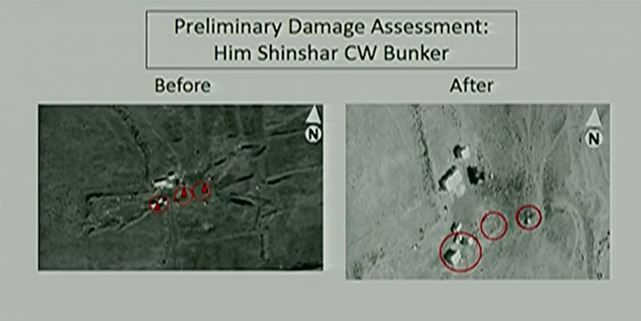
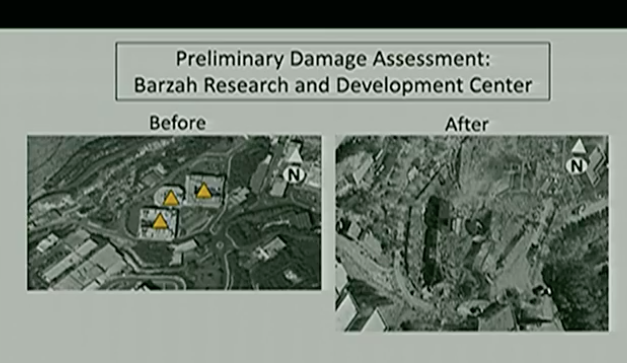
The Pentagon says the U.S.-led airstrikes on Syria “successfully hit every target.”
Chief Pentagon spokeswoman Dana White said Saturday that the strikes were launched to “cripple Syria’s ability to use chemical weapons in the future.”
Defense Department image click to enlarge
The U.S., France and Britain launched military strikes in Syria on Friday night to punish President Bashar Assad (bah-SHAR’ AH’-sahd) for an apparent chemical attack against civilians last week and to deter him from doing it again.
White says the strikes do not “represent a change in U.S. policy or an attempt to depose the Syrian regime.” But she says, “We cannot allow such grievous violations of international law.”
She also called on Russia to “honor its commitment” to ensure the Assad regime gives up chemical weapons.
___
9 a.m.
Russia’s Foreign Ministry says the U.S. and its allies launched strikes on Syria to derail an investigation into a purported chemical attack.
The U.S., Britain and France said they launched Saturday’s strike to punish Syrian President Bashar Assad for an alleged chemical attack against civilians in the town of Douma outside Damascus.
The Foreign Ministry said that facts presented by Russian investigators indicated the purported attack was a “premeditated and cynical sham.”
The ministry noted that the strikes were launched on Saturday as a team of experts from the Organization for the Prohibition of
Chemical Weapons was to visit Douma. It added that “we have every reason to believe that the attack on Syria was intended to hamper the work of the OPCW inspectors.”
———————
WASHINGTON (AP) — Allied missiles struck at the heart of Syrian chemical weapons arsenal in a show of force and resolve aimed at punishing the Assad government for a suspected poison gas attack against civilians and deterring the possible future use of such banned weapons.
A perfectly executed strike last night. Thank you to France and the United Kingdom for their wisdom and the power of their fine Military. Could not have had a better result. Mission Accomplished!
“A perfectly executed strike,” President Donald Trump tweeted Saturday in the aftermath of his second decision in two years to fire missiles against Syria. “Could not have had a better result. Mission Accomplished!”
His choice of words recalled a similar claim associated with President George W. Bush following the U.S.-led invasion of Iraq. Bush addressed sailors aboard a ship in May 2003 alongside a “Mission Accomplished” banner, just weeks before it became apparent that Iraqis had organized an insurgency that tied down U.S. forces for years.
Syria’s chief allies, Russia and Iran, called the use of force by the United States, Britain and France a “military crime” and “act of aggression” with the potential to worsen a humanitarian crisis after years of civil war. The U.N. Security Council planned to meet later Saturday at Moscow’s request.
“Good souls will not be humiliated,” Syrian President Bashar Assad tweeted, while hundreds of Syrians gathered in Damascus, the capital, where they flashed victory signs and waved flags in scenes of defiance after the one-hour barrage launched Friday evening (early Saturday in Syria).
Before a planned Pentagon briefing Saturday, officials said Air Force B-1B strategic bombers launched JASSM “standoff” missiles for the first time in combat, evading Syrian air defenses. In all, the Navy launched a little more than 100 Tomahawk cruise missiles from destroyers in the Mediterranean Sea. The officials, who provided details on condition of anonymity ahead of public announcements, said Syria’s air defenses were ineffective.
A global chemical warfare watchdog group said its fact-finding mission would go as planned in Douma, where the apparent use of poison gas against civilians on April 7 that killed more than 40 people compelled the Western allies to launch their attack. Syria has denied the accusation.
But France’s foreign minister said there was “no doubt” the Assad government was responsible, and he threatened further retaliatory strikes if chemical weapons were used again, as did Pentagon chief Jim Mattis, who said the assault was a “one-time shot,” as long as chemical weapons weren’t used again.
NATO representatives planned a special session to hear from U.S., British and French officials.
Pentagon officials said the attacks, carried out by manned aircraft and from ships that launched cruise missiles from the Mediterranean Sea, targeted the heart of Assad’s programs to develop and produce chemical weapons. Russia’s military said Syrian air defense units downed 71 out of 103 cruise missiles fired by the allies.
Mattis said Friday there were no reports of U.S. losses in what he described as a heavy but carefully limited assault.
Trump said the U.S. was prepared to sustain economic, diplomatic and military pressure on Assad until he ends what Trump called a criminal pattern of killing his own people with internationally banned chemical weapons. That did not mean military strikes would continue; in fact, Gen. Joseph Dunford, chairman of the Joint Chiefs of Staff, said no additional attacks were currently planned.
Russian leader Vladimir Putin reaffirmed the Kremlin’s skepticism about the allies’ Douma claim, saying Russian military experts had found no trace of the attack. He criticized the U.S. and its allies for launching the strike without waiting for international inspectors to visit the area.
But British Prime Minister Theresa May cited reports she said indicated the Syrian government used a barrel bomb — large containers packed with fuel, explosives and scraps of metal — to deliver the chemicals. “No other group” could have carried out that attack, she said, adding that the allies’ use of force was “right and legal.”
German Chancellor Angela Merkel said the West’s response was “necessary and appropriate.”
Mattis disclosed that the U.S. had not yet confirmed that the Douma attack — the most recent suspected Syrian chemical weapons attack, on April 7 — included the use of sarin gas. He said at least one chemical was used — chlorine, which also has legitimate industrial uses and had not previously triggered a U.S. military response.
He said the targets selected by U.S., British and French officials were meant to minimize civilian casualties.
“This is difficult to do in a situation like this,” he said, in light of the volatility of chemical agents.
Defense officials from the countries involved in the attack gave differing accounts of how much warning was given to the Russians, Syria’s powerful ally.
Dunford said the U.S. did not coordinate targets with or notify the Russian government of the strikes, beyond normal airspace “de-confliction” communications. But the description from an ally put things differently. French Defense Minister Florence Parly said that “with our allies, we ensured that the Russians were warned ahead of time.”
At a Pentagon news conference alongside Mattis, and with British and French military officers beside them to emphasize allied unity, Dunford said the attacks targeted mainly three targets in western Syria.
Dunford said missiles first struck a scientific research center in the Damascus area that he said was a center of Syrian research, development, production and testing of chemical and biological warfare technology. The second target was a chemical weapons storage facility west of Homs. He said this was believed to be the main site of Syrian sarin and precursor chemical production equipment.
The third target was a chemical weapons equipment storage facility and an important command post, also west of Homs, Dunford said.
British leader May said in London that the West had tried “every possible” diplomatic means to stop Assad from using chemical weapons. “But our efforts have been repeatedly thwarted” by Syria and Russia, she said.
“So there is no practicable alternative to the use of force to degrade and deter the use of chemical weapons by the Syrian regime,” May said. “This is not about intervening in a civil war. It is not about regime change.”
French President Emmanuel Macron said in a statement that a target of the strike was the Syrian government’s “clandestine chemical arsenal.”
The Syrian government has repeatedly denied any use of banned weapons.
The decision to strike, after days of deliberations, marked Trump’s second order to attack Syria. He authorized a barrage of Tomahawk cruise missiles to hit a single Syrian airfield in April 2017 in retaliation for Assad’s use of sarin gas against civilians.
Trump chastised Syria’s two main allies, Russia and Iran, for their roles in supporting “murderous dictators,” and noted that Russian President Vladimir Putin had guaranteed a 2013 international agreement for Assad to get rid of all of his chemical weapons. He called on Moscow to change course and join the West in seeking a more responsible regime in Damascus.
In his nationwide address, Trump stressed that he has no interest in a longtime fight with Syria.
“As other nations step up their contributions, we look forward to the day when we can bring our warriors home,” Trump said. “And great warriors they are.”
ROLLA, Mo. (AP) – A report says the University of Missouri System may face a budget shortfall of up to $200 million a year by fiscal 2023 without new sources of revenue and additional spending.
The Columbia Daily Tribune reports that the system’s chief financial officer, Ryan Rapp, prepared the report and presented it to the Board of Curators Thursday. The board is considering tuition increases for the fall, particularly if lawmakers approve new state tax cuts.
Rapp says the past three years mark the first time since the 1960s that state aid, tuition revenue and enrollment have all declined.
The board is considering a proposal that would increase tuition for students besides in-state undergraduates by 2.1 percent. Tuition for professional programs would increase between 2.1 and 8 percent.
CHERRY HILL, N.J. (AP) — A public employee pension crisis for state governments has deepened to a record level even after nearly nine years of economic recovery for the nation, according to a study released Thursday, leaving many states especially vulnerable if the economy hits a downturn.
The massive unfunded pension liabilities are becoming a real problem not just for public-sector retirees and workers concerned about their future but for everyone else, too. As states try to prop up their pension systems, it means less money is available for core government services such as education, public safety and parks.
The annual report from the Pew Charitable Trusts finds public worker pension funds with heavy state government involvement owed retirees and current workers $4 trillion as of 2016. They had about $2.6 trillion in assets, creating a gap of about one-third, or a record $1.4 trillion.
While the study looks only at pension funds with major state-government involvement, systems run by cities, counties, school districts and other local entities have had similar problems. Just this week, the Chicago suburb of Harvey, a city with a history of underpaying its pension obligations, announced deep layoffs in its police and fire departments . Officials blamed their rising pension obligations.
Larger cities and school districts across the country also have had service cuts or freezes over the years to pay for rising costs for their retirees.
Pew says that pension funds were well-funded until about 2000. Around that time, many states increased pension benefits without a way to pay for them. In some states, such as California and Illinois, courts usually find that the government must honor those commitments.
Also in the early 2000s, the tech stock bubble burst, spiraling investment returns downward. Some states, such as New Jersey, made things worse by skimping on their contributions.
Many pension funds had not recovered from the dot-com bust by the time the Great Recession hit less than a decade later. And many haven’t recovered from that, either.
“When the next downturn comes, there will be additional pressures,” David Draine, a senior officer at Pew, told The Associated Press.
Colorado, Connecticut, Illinois, Kentucky and New Jersey had less than half the assets they needed to meet their obligations, according to the report.
Just four states — New York, South Carolina, Tennessee and Wisconsin — had at least 90 percent funding. Draine said those states and some others that have repaired pension shortfalls since the Great Recession will be in better shape the next time the economy slides.
The Pew report found that lackluster investment returns in 2016 explained most of why the condition of pensions declined from the previous year. Pension administrators were counting on median returns of 7.5 percent that year. Instead, they made just 1 percent.
But the study says that even if the investments had met expectations, the overall position of pension funds still would have declined because state governments were not contributing enough. Only Kansas contributed more to its pension system in 2016 than it paid out, Pew found.
In New Jersey, actuaries say it will take around $6 billion a year in contributions from the state to shore up its pension system. It’s taken years to get to less than half that amount in the current budget. Maintaining that progress makes it difficult to pay for other priorities, such as boosting school funding.
The study finds that states increasingly rely on investment returns in an attempt to stabilize their finances, which makes them more vulnerable to market fluctuations.
Because of a strong market last year, next year’s report, which will assess the state of pensions as of 2017, is expected to look better. But market slides so far this year have not been encouraging, Draine said.
The Missouri Department of Conservation (MDC) and Missouri Department of Transportation (MoDOT) are encouraging people throughout Missouri to help “bash trash.”
According to a press release from the MDC, the 16th annual No MOre Trash! BashApril 15 through May 15 focuses on “spring cleaning” the outdoors by asking people to pick up litter across Missouri from roadsides, parks, neighborhoods, rivers, streams, trails, and other places. TrashBash activities also include various educational efforts in schools, community events, and Earth Day celebrations around the state.
“Littering harms the environment and pollutes our waterways,” said MoDOT No MOre Trash! Coordinator Stacy Armstrong. “Please consider the impact you can make on the environment by recycling, reusing, and disposing of waste properly.”
Each year, MoDOT spends about $6.75 million to remove litter from more than 385,000 acres of roadsides along 34,000 state highway miles. Annual volunteer efforts to pick up litter along Missouri highways are valued at more than $1 million.
Littering also hurts wildlife and Missouri outdoors.
“Many animals mistake litter for food and become sick and die when they try to ingest it,” said MDC No MOre Trash! Coordinator Joe Jerek. “Birds, fish, turtles, and other animals also get tangled in litter, such as plastic six-pack holders and fishing line, and it can kill them.”
Last year, volunteers collected more than 43,000 bags of litter and several truckloads of debris during the spring No More Trash! Bash. People also attended numerous educational events that stressed the importance of not littering.
Volunteers also participated through Adopt-A-Highway and Stream Team litter cleanup events. Missouri Stream Team Program volunteers removed 547 tons of litter from waterways and dedicated more than $2.3 million worth of volunteer time to litter removal statewide annually.
The MDC said volunteers are needed across the state this year to participate in litter cleanup activities. Participants can report their cleanup efforts and will receive a No MOre Trash! thank-you pin. For more information, visit nomoretrash.org, or call 1-888-ASK-MODOT (1-888-275-6636).
WASHINGTON (AP) — The Latest on U.S. missile strikes on Syria (all times local):
9:05 p.m.
President Donald Trump says he is “prepared to sustain” strikes against Syria until the use of chemical agents stops.
The United States, along with assurance from France and the United Kingdom, launched a response Friday against the regime of Syrian leader Bashar al-Assad days after his government allegedly used chemical weapons on its citizens.
But Trump says America does not seek “an indefinite presence” in Syria and will look to pull out its troops once the Islamic State is totally defeated.
Trump has signaled in recent weeks that, despite advice from his national security team, he wanted to accelerate the timetable of the withdrawal of American forces.
__
9 p.m.
President Donald Trump says the United States has “launched precision strikes” on targets associated with Syrian chemical weapons program.
Trump spoke from the White House Friday night. He says a “combined operation” with France and the United Kingdom is underway.
Trump says that last Saturday, Syrian President Bashar Assad deployed chemical weapons in what was a “significant escalation in a pattern of chemical weapons use by that very terrible regime.”





 The Columbia Daily Tribune reports that the system’s chief financial officer, Ryan Rapp, prepared the report and presented it to the Board of Curators Thursday. The board is considering tuition increases for the fall, particularly if lawmakers approve new state tax cuts.


