We have a brand new updated website! Click here to check it out!

Brush fires prompt evacuations


St Joseph residents awoke Sunday to the smell of brush fires ringing the city.

By Sunday evening, smoke had dramatically reduced visibility in some areas, and prompted warnings to stay away from others. Some homes were evacuated.

A controlled burn in Doniphan County, Kansas is believed to have jumped the Missouri River and spread in St Joseph Sunday.

In a Nixle alert, the St Joseph Police Department notified residents to evacuate at least three homes along Elwood Street near Wyeth Hill. A fire in that area burned most of the day Sunday. Authorities urged you to avoid areas of Wyeth Hill south to the area of River Front Park in downtown St Joseph. The St. Jo Frontier Casino was evacuated.

Over the weekend nearly a dozen grass fires were reported in our area, from Amazonia to the north, to the City Landfill to the south.

The fire across the river in Elwood produced enough smoke before jumping the river to obscure visibility and turn up noses from downtown to northern St Joseph.

“So many of these fires are connecting,” said Training Chief Mike Neylon, the St Joseph Fire Department’s Public Information Officer. “They’re producing a lot of embers, and a lot of problems.”

“It’s a logistical nightmare. We have at least one unit from Rosecrans Airport, and three from Andrew County actively fighting fires. City Yards personnel are setting up roadblocks and police are redirecting traffic in some areas,” Neylon said.

Angie Springs with the American Red Cross says they are offering assistance to affected residents.

Chief Neylon says they’ve asked railroad officials to stop using the tracks along the river as an added precaution.

Bills lessening marijuana restrictions stall in Kan. House

marijuanaNICHOLAS CLAYTON, Associated Press

TOPEKA, Kan. (AP) — Bills easing the state’s restrictions on marijuana are moving deeper into the Kansas Legislature than ever before, but face an uncertain future at the midpoint of the session.

The Kansas House in late February decided to delay action on two marijuana bills. One would decrease penalties for an offender’s first two marijuana possession convictions. The other allows some seizure patients to receive treatments from marijuana-based medicines.

Republican Rep. John Rubin of Shawnee sponsored the bill on marijuana sentencing. He said it was delayed because of the timing of Wichita’s city election next month in which a ballot measure will ask voters whether to decriminalize first-time possession.

The seizures bill passed the House committee. Democratic sponsor Rep. John Wilson is seeking necessary votes on the House floor from Republicans.

Researcher: Hike In Kan. Tobacco Tax Would Generate Stable Revenues

Screen Shot 2015-03-13 at 9.40.47 AM By ANDY MARSO

A university researcher says his data suggests a proposed tax increase on cigarettes would provide a stable revenue stream for the state while also generating big saving on health care costs.

Frank Chaloupka, an economics professor from the University of Illinois at Chicago, said the $1.50-per-pack increase would cause some Kansans to quit smoking, but not enough to offset the revenue gained from those who continue. The savings in health care costs from those who do quit could amount to $1 billion over five years.

“You do have it both ways,” he said. “We’ve seen this in state after state after state.”

Chaloupka is the head of the university’s Health Policy Center and director of Tobacconomics, a group of economists and other policy researchers who study tobacco control issues.

He has authored several studies on the effect of tobacco taxes in other states.

“You see the same patterns,” Chaloupka said. “Whenever taxes and prices go up, you see reductions in overall cigarette smoking.”

Representatives from the American Heart Association and other health advocacy groups introduced Chaloupka and his research to key Kansas legislators Friday in an attempt to re-energize a push for a tobacco tax increase that has thus far gained little traction in the Capitol.

Gov. Sam Brownback proposed the increase as part of his effort to close a budget gap of more than $600 million.

But Republican leaders in both the House and Senate have been cool to the idea. Representatives of the Kansas Chamber of Commerce and the convenience store industry testified in committee hearings that the increase would hurt businesses, especially those in the Kansas City area, because Missouri has the nation’s lowest cigarette tax.

Chaloupka’s research on the proposes Kansas tax increase was paid for in part by a grant from the National Cancer Institute at the federal National Institutes of Health.

He said the increase is projected to cause about 25,000 adult smokers to quit and dissuade another 25,000 children from starting.

The reduced smoking rates are estimated to prevent almost 15,000 smoking-related deaths and lead to major savings in state health care spending.

But Chaloupka said the increased cigarette tax still would provide a new revenue stream for the state, because the reductions in cigarette purchases would not offset the increased tax on each pack.

“The revenues that are generated are very stable, and very predictable,” he said. “Every time the state raises their taxes, they’re going to see big increases in revenues.”

That has proved true thus far in the dozens of state tax increases that Chaloupka has studied, including Kansas’ last cigarette tax hike, in 2002.

The state’s division of budget estimates that the tax increase currently on the table would provide about $72 million in additional state revenue the first year.

Chaloupka said much of the smoking reduction would come after that initial sticker shock, causing new revenue to fall before leveling off near $45 million per year five years after the tax increase.

“The reductions in consumption are not in proportion to the increase in price,” he said. “Basically, we estimate for every 10 percent increase in price, there’s about a 4 percent decrease in consumption.”

Chaloupka said his research suggests some Kansans will cross the border to buy their cigarettes, but not in numbers that would drastically reduce the effectiveness of the policy change.

When surrounding states have increased their tobacco taxes in the past, it has raised the revenue rates in Missouri slightly but raised far more revenue in the states in which the hikes occurred.

“You get this really small increase in revenues in Missouri, because maybe there is a little bit of cross-border shopping,” Chaloupka said. “But it’s certainly generating the revenues that were expected in the states that raised their taxes.”


Andy Marso is a reporter for Heartland Health Monitor, a news collaboration focusing on health issues and their impact in Missouri and Kansas.

Should Changes be made to the Kan. Endangered Species List?

capitolBy Kelsie Jennings
KU Statehouse Wire Service

TOPEKA – The Sedgwick County Board of Commissioners would like to remove the eastern spotted skunk from Kansas’ endangered species list because they say it’s unnecessary and a waste of taxpayer’s money.

Sedgwick County Commission chairman Richard Ranzau said the endangered species list includes some species that shouldn’t be on it.

Ranzau said removing the skunk from the list would save money when doing things such as land banking for land development. He said the Sedgwick County had to spend $24,000 to move a project and land bank because the skunks inhabited the original area.

He said when the county also does stream maintenance, they’re required to build “brush piles” from the leftover trees and shrubs as habitats for the skunks. For some stream maintenance projects, the habitats are built on private property where owners tear them down forcing country workers to rebuild them. The county has also had to purchase action permits for projects that require replanting with special grass and building brush piles. Ranzau said all of this is unnecessary considering there aren’t many eastern spotted skunk sightings.

“Even if you do think they should be listed, nothing that we’re doing is having an effect on this and so we’re wasting time, money and effort,” he said. “From a tax payer point-of-view when I look at this, it just doesn’t make sense.”

When presenting Senate Bill 269 to the Senate Natural Resources Committee on Thursday, Ranzau told the senators his research showed the skunks are not indigenous to Kansas and should never have been on the list. He said the skunks migrated as settlers moved across the state.

“Why should we be concerned about it here in Kansas?” Ranzau said. “It should’ve never been listed to begin with.”

Ranzau said the commissioners are starting with the skunk because it’s caused the most trouble for the county’s public works department and is the easiest to remove, but said the entire endangered species list should be reviewed again because there are other animals on the list that don’t make sense.

“There’s a variety of issues that we could tackle, but you’ve got to start somewhere,” he said.

Several opponents to the bill gave written and verbal testimony, including the Kansas Department of Wildlife, Parks and Tourism, Audubon of Kansas and the Kansas Chapter of the Sierra Club.

Secretary of the Kansas Department of Wildlife, Parks and Tourism, Robin Jennison told the committee that the removal of the skunk would open the door for other species to be taken off the list in the future and could lead to a slippery slope.

“I think it’s a dangerous precedent to start listing species legislatively,” Jennison said. “I think when we start listing these species by what the popular perception is rather than the scientific reviewed and the process that we currently have in place, I
think that’s a dangerous thing.”

The secretary of the Kansas Department of Wildlife, Parks and Tourism is responsible for deciding what species are endangered. There is a review every five years that involves going through the endangered species list.

The Sierra Club’s legislative director and lobbyist Zack Pistora also asked the committee to look at the situation scientifically. He addressed the risks involved such as the KDWPT losing federal funding if they don’t meet federal standards by sticking with the formal process of the Endangered Species Act of 1973, which requires the secretary of KDWPT to make the decision on what species should be protected. The Sierra Club’s written testimony says this is “obligatory, not optional.” He said it would also risk having federal agencies get involved.

“We encourage you to follow the due process laid out in front of us,” Pistora said.

Ranzau said the bill wouldn’t cost the state anything, and the fiscal note for the bill says it could possibly reduce costs to agencies by reducing the number of endangered permits that must be reviewed.

The Senate Natural Resources Committee will discuss SB 269 possibly next week after hearing other bills.

Kelsie Jennings is a University of Kansas senior from Olathe, majoring in journalism.

Kansas Supreme Court tosses 50-year term in murder case

Mark Salary- photo Kan. Dpt. of Corrections

TOPEKA, Kan. (AP) — The Kansas Supreme Court has thrown out the 50-year prison sentence of a man convicted of fatally shooting his uncle in 2008 in Kansas City, Kansas.

While ordering Friday that a Wyandotte County trial court resentence Mark Salary, the state’s high court upheld Salary’s first-degree murder conviction in the death of Valray Estell, who at that time of the shooting was his live-in uncle.

Authorities had alleged that Salary shot 58-year-old Estell and left him to die in a burning house.

Salary had insisted the shooting was self-defense.

The Topeka Capital-Journal reports that the Kansas Supreme Court rejected Salary’s request for a new trial.

Officials: Listeriosis not cause of 3 Kan. deaths, but factor

kdheKANSAS CITY, Mo. (AP) — Kansas health officials say a foodborne illness linked to some Blue Bell ice cream products may have been a contributing factor in the deaths of three hospital patients.

But Kansas Department of Health and Environment spokeswoman Sara Belfry said Saturday that listeriosis didn’t cause the deaths.

Belfry said the only detail she could provide about the patients at Via Christi St. Francis hospital in Wichita, Kansas, is that they were adults.

Hospital spokeswoman Maria Loving said she couldn’t discuss why the patients were hospitalized, citing patient confidentiality laws.

The U.S. Food and Drug Administration says five people developed listeriosis in Kansas after eating products from one production line at the Blue Bell creamery in Brenham, Texas.

2nd chance enrollment for Affordable Care Act set to begin

HealthRICARDO ALONSO-ZALDIVAR, Associated Press

WASHINGTON (AP) — If you’re among the several million people hit with new federal fines for going without health insurance, then starting Sunday you’ll get a second chance to sign up for 2015 coverage through HealthCare.gov.

That might ease the sting of rising penalties for people still uninsured this year.

Fines payable to the IRS are the stick behind the coverage offer in the health law.

Virtually every in the U.S. is now required to get covered through an employer, a government program, or by buying individual policies.

This is the first year fines are being collected. H&R Block says the penalty averages about $170 among its affected customers.

If you’re hit with the penalty, you’ll have until April 30 to sign up for coverage and avoid bigger fines next year.

Kansas court rules it may block school funding changes

School fundingTOPEKA, Kan. (AP) — A Kansas district court may block the state from changing its school funding system while a lawsuit regarding the system is pending.

The court released an order Friday announcing it may intervene to protect the status quo as it decides a case determining whether Kansas is funding education at constitutionally appropriate levels. The court will hold a hearing on the issue May 7.

The Kansas House passed a bill overhauling the state’s school funding plan just hours earlier. The plan would replace the current formula with block grants to each school district.

Kansas Attorney General Derek Schmidt, in a statement, called the move unusual and unexpected. Schmidt said the order will further delay the case and create a host of additional constitutional and legal issues.

2 hospitalized after car hits semi

KHPOTTAWA – Two people were injured in an accident just after 11:30 p.m. on Friday in Franklin County.

The Kansas Highway Patrol reported a 2003 Chevy Impala driven by Julia M. Gillespie, 45, Ottawa, was southbound on the shoulder of the ramp from Eisenhower to Interstate 35 in Ottawa and struck a semi.

Gillespie was transported to Overland Park Regional Medical Center. A passenger in the semi Harbhajan S Dhuna, 55, Shelby Township, MI., was transported to Ransom Memorial Hospital.

The driver of the semi Navdeep Singh, 34, Flushing, MI., was not injured.

The KHP reported all were properly restrained at the time of the collision.

State lawmakers pressed to call for a constitutional convention

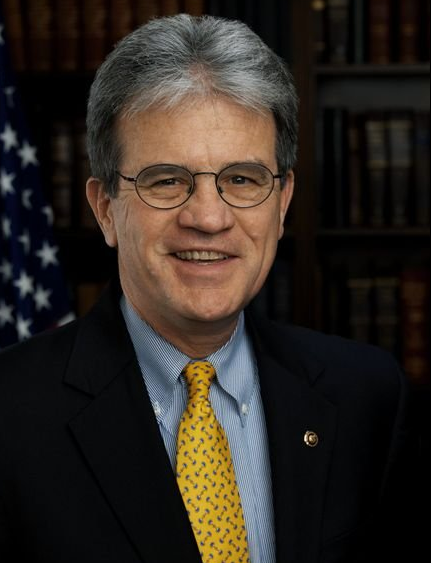
Coburn
Coburn

By Austin Fisher and Amelia Arvesen
KU Statehouse Wire Service

TOPEKA — Former U.S. Sen. Tom Coburn pressed Kansas legislators Thursday to join Arkansas, Georgia and Florida in compelling Congress to call a constitutional convention to adopt limits on power of an “out-of-control” federal government.
Coburn, an Oklahoma Republican who resigned in January from the Senate, told state lawmakers Thursday that they must flex their authority under Article V of the U.S. Constitution to rein in the “irresponsible, unaccountable and unrestrained” federal government in Washington, D.C.

“I’m here to tell you that they’re never going to give up any of their power,” Coburn said.

Identical resolutions were presented in the Kansas House and Senate. If both chambers pass the resolution, at least 34 states would then have to pass resolutions on the same issue to hold a convention. There has not been a constitutional convention since the original in 1787.

Opposition came from Richard Fry, an attorney with the Patriot Coalition, who said if members in Washington are ignoring their oath to a 100–year-old constitution, they won’t start obeying a new one.
“State legislatures already have the necessary constitutional authority to rein in a rogue federal government without amending the U.S. Constitution,” Fry said.
Instead, Fry called the American people to “fulfill our moral and patriotic duty” to hold the government accountable to more strictly interpret the Constitution.
In the House committee hearing, Rep. Brett Hildabrand (R-Shawnee) agreed with Fry.
“If they don’t follow the law now, why would they after the convention?” Hildabrand said.
Coburn responded by restating the importance of states reclaiming power.
“If they don’t comply we may have to have another convention to place sanctions on those who don’t follow the law,” Coburn said.
In the Senate committee, Sen. Tom Holland (D-Baldwin City) expressed his concern with Kansas’ method for choosing legislators as convention delegates, worried that some might have interests in influential businesses like Koch Industries. He worried voters would become increasingly disenfranchised.
“My fear is that those special money interests will invariably find a way to weasel their way into these conventions,” Holland said.

Coburn said the interest in money will always exist.

“Do we do something or do we not do something?” Coburn said. “When people start doubting, then we start falling apart.”

Bel Aire resident Blake Branson said a convention could potentially weaken the Constitution if entrusted to the least liberty conscious states.

“A truly dangerous amendment will be one that looks like a beautiful compromise,” Branson said.

Coburn said it isn’t a partisan issue — conservatives and liberals would not push to change the First or Second Amendment. He said the people want freedom and confidence in a good government.

“I actually think the American people are smarter than the people in Washington by far, and I think Kansans are smarter than who we’ve sent to Washington,” Coburn said.

Paul Degener, a Shawnee County resident, said amending the Constitution through Article V is too dangerous because the federal government will have control over who the convention delegates are, which amendments would be considered and how the convention would be conducted.

“Proponents…are putting too much trust in the Congress,” Degener said. “Our federal government has implemented at least five of the ten planks of the Communist Manifesto with the help of the state legislatures. Do not give them the opportunity of finishing the job by calling for a convention.”

The resolution’s language calls to address “abuses of power” like the “crushing national debt through improper and imprudent spending” and “manipulative” federal mandates.

So far, the measure has 14 sponsors of 40 total in the Senate and 41 of 125 in the House. If it came to a vote, a two-thirds majority in both sides of the Legislature would be required for passage.

Austin Fisher is a University of Kansas senior from Lawrence majoring in journalism. Amelia Arvesen is a University of Kansas senior from San Ramon, Calif., majoring in journalism.

Copyright Eagle Radio | FCC Public Files | EEO Public File