We have a brand new updated website! Click here to check it out!

Liberty Public Schools among districts getting EPA help for new school buses

Liberty public schoolsThe Environmental Protection Agency continues its efforts to refit or replace old diesel school buses to reduce air pollution, and the Liberty Public Schools will be among ten school districts to benefit from the program.

The ten Missouri districts will be able to upgrade their bus fleets to new, cleaner buses with a total of $515,000 in rebates from the EPA.

The school districts will receive rebates through EPA’s Diesel Emissions Reduction Act funding to replace existing diesel school buses.

“Americans put their children on school buses for a safe ride to school. They shouldn’t have to worry about harmful pollutants emitted from these buses,” said Janet McCabe, assistant administrator for EPA’s Office of Air and Radiation. “This funding will help keep our children safe and improve the health of those in communities across the country.”

The new buses are more than 90 percent cleaner, reducing pollutants such as nitrogen oxides and particulate matter that are linked to health problems including asthma and lung damage. The districts must use matching funds from other sources to purchase new buses.

Nationally, 76 school bus fleets in 30 states will receive rebates through EPA’s DERA funding. Since 2008, the DERA program has funded over 600 clean diesel projects across the country. These projects have reduced emissions for more than 60,000 engines. EPA has implemented standards to make diesel engines more than 90 percent cleaner, but many older diesel school buses remain in operation and predate these standards.

Selectees must maintain ownership of replacement buses for three years from the date of purchase, and the buses must be used for the purpose of transporting 10 or more preprimary, primary or secondary students to schools or homes during that three-year period.

Applicants were randomly selected and placed in order on a list until a total of $3 million was allocated. This was EPA’s second round of the rebate program aimed at replacing older diesel school buses. Public and private school bus fleets were eligible to apply for rebates for the replacement of school buses with engine model years of 2006 or older.

Missouri districts include:
Cozad Transportation LLC, $20,000, for one bus
Van Buren R-I School District, $60,000 for three buses
Liberty Public Schools District #53, $100,000 for five buses
Orchard Farm R-V School District, $80,000 for four buses
Windsor C-1 School District, $20,000 for one bus
North St. Francois County R-I School District, $80,000 for four buses
Clever R-V School District, $20,000 for one bus
Sullivan School District, $40,000 for two buses
Winston R-VI School District, $35,000 for two buses
Salisbury R-IV School District, $60,000 for three buses

Six school districts in Kansas also qualified:
Neodesha Public Schools; $100,000 for five buses
Haysville Unified School District; $60,000 for three buses
Uniontown Public Schools; $20,000 for one bus
Central Plains Unified School District 112, Holyrood, Kan.; $60,000 for three buses
Royal Valley Unified School District, Mayetta, Kan.; $40,000 for two buses
Haven Unified School District 312; $75,000 for four buses

Five districts in Nebraska will also get rebates:
Nebraska Unified District #1 (Clearwater, Orchard and Verdigre public schools); $20,000 for one bus
Chase County School District, Imperial, Neb.; $40,000 for two buses
Mead Public Schools; $20,000 for one bus
High Plains Community Schools, Polk, Neb.; $20,000 for one bus
Wahoo Public Schools, Wahoo, Neb.; $20,000 for one bus

Simpson waives preliminary hearing

Amanda Simpson & Andrew Clary
The case of a St Joe man accused of shooting his ex-wife and killing her boyfriend will be certified for Circuit Court after he waived his preliminary hearing Wednesday.

Daron Simpson, 34, is charged with 2nd Degree Murder and 1st Degree Assault for the shooting incident January 24th that left Amanda Simpson seriously hurt and Andrew Clary dead.

Investigators say in court documents Simpson crashed his vehicle through the garage door of the couple’s home north of Faucett, then entered the home and shot the couple in their bedroom.

In an electronic filing Wednesday, Mr Simpson waived his right to a preliminary hearing. He remains in custody without bond pending his Circuit Court arraignment.

Kansas commune leader found guilty of drowning woman in pool

Perez
Perez

WICHITA, Kan. (AP) — The leader of a Kansas commune that received millions of dollars in life insurance payouts from dead members has been convicted of murder in the drowning death of a female member.

A jury on Wednesday found 55-year-old Daniel Perez guilty of first-degree premeditated murder for 2003 death of Patricia Hughes at the suburban Wichita compound that was home to the commune. Her death was considered an accident until 2011, when a woman who was 12 at the time told authorities the death was staged.

He also was found guilty of all 27 other counts, including rape, aggravated criminal sodomy, sexual exploitation of a child and making false information.

Perez testified during the trial that he was innocent of all the allegations.

Kan. Father, Son Sentenced For Trafficking in Designer Drugs

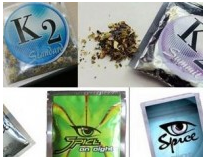
K2 potpourriTOPEKA, KAN. – A father and son from Kansas who launched a global sales and supply network for smokable synthetic cannabinoids – also called synthetic marijuana — and other designer drugs were sentenced Tuesday to federal prison for violating the federal Food, Drug and Cosmetic Act, according to U.S. Attorney Barry Grissom.

Clark Sloan, 55, Tonganoxie, Kan., was sentenced to 87 months in federal prison. His son, Jonathan Sloan, 34, Lawrence, Kan., was sentenced to 96 months in federal prison. In September 2014, they were convicted in a federal jury trial on 20 counts including one count of conspiracy, two counts of misbranding, 15 counts of mail fraud, one count of smuggling and one count of money laundering.

During trial, prosecutors presented evidence that the men conspired to manufacture and sell designer drugs, including a marijuana substitute called K2 that was named after the second-highest mountain in the world. The business, which began in a shop in Lawrence, Kan., grew to encompass a chain of suppliers, retailers, wholesalers and business associates with locations in Kansas, California, Massachusetts, New Jersey, Oregon, Nevada and Indiana, as well as in other nations including Argentina, Latvia, Germany, Lithuania, the United Kingdom, Ukraine, the Netherlands, Canada, Sweden, Singapore, Thailand and Uruguay. The defendants made at least $3.3 million from the sale of the drugs

Prosecutors presented evidence that Jonathan Sloan was co-owner of two businesses, Persephone’s Journey, a retail store in Lawrence, Kan., and Bouncing Bear Botanicals, ostensibly a wholesaler of herbs and botanical products, with co-defendant Bradley Miller of Wichita, Kan. Bouncing Bear Botanicals was located in the basement of Persephone’s Journey and then moved to a warehouse in Oskaloosa, Kan. Clark Sloan, who was Miller’s brother, developed and monitored the Web site for Bouncing Bear Botanicals and worked in marketing and Internet technologies.

Miller developed recipes for K2 and manufactured it. During trial, prosecutors presented evidence that:

The defendants manufactured and distributed K2 as an “all natural product” but it contained synthetic chemicals called JWH Compounds that mimic the effects of the THC in marijuana. Their products also contained solvents, either the alcohol Everclear or acetone, as well as other additives.
They manufactured and sold at least four types of K2 products: Standard, Citron, Blonde and Summit, with Standard being the least potent and Summit being the most potent, depending on the amount of JWH Compounds that were mixed with herbs.
The defendants manufactured the K2 without quality controls, resulting in inconsistent potencies. They intended K2 products to be smoked like marijuana by recreational drug users, but they falsely referred to K2 products as aromatic incense and falsely labeled them as “not for consumption.”
“Consumers must always be aware that they put their health at risk when they buy drugs from unknown sources online and in stores,” said Catherine Hermsen, Special Agent in Charge, FDA’s Office of Criminal Investigations. “OCI is committed to working to protect the U.S. public health.”

Co-defendant Bradley Miller is set for sentencing March 16.

Grissom commended the Food and Drug Administration, Assistant U.S. Attorney Tanya Treadway and Assistant U.S. Attorney Tony Mattivi for their work on the case.

Kansas legislators consider ban of powdered alcohol

Rep. Steve Brunk
Rep. Steve Brunk

By Ashley Booker

Legislators are looking to ban the sale of powdered alcohol in Kansas — before it even hits liquor store shelves. “We as an industry want you to go ahead and help us take care of this powdering product before it becomes an issue,” Spencer Duncan, a lobbyist for the Kansas Wine and Spirits Wholesalers Association, told the House Federal and State Affairs committee Tuesday.

The proposed legislation, House Bill 2208, would prohibit the sale of powdered alcohol, known as Palcohol, by licensed liquor stores and distributors.

The powdered alcohol comes in 4- by 6-inch one-shot pouches, and when mixed with water produces alcohol that comes in six varieties: rum, vodka, cosmopolitan, mojito, lemondrop and powderita. The developers of Palcohol hope to begin selling their product this spring.

Last spring, the Alcohol and Tobacco Tax and Trade Bureau (TTB) approved Palcohol, but the federal agency later said the approval was issued in error and revoked it because of labeling issues. Rep. Broderick Henderson, a Democrat from Kansas City, said Palcohol should have federal approval before it’s allowed in Kansas.

“I think we need to do something about it, and then probably end up in the near future going back to make sure that was enough regulation,” Henderson said. Phil Bradley of the Kansas Licensed Beverage Association said 24 states are considering banning Palcohol.

Alaska, Delaware, South Carolina, Vermont and Louisiana already have banned it. Proponents of the bill are concerned Palcohol will be slipped unknowingly into drinks or food, increase underage drinking or be snorted like cocaine. It’s also easy to conceal, which raises other concerns for bars, which are responsible for alcohol consumed on site.

“We are very concerned that if it becomes legal, or even if it comes from our surrounding states, that it will start being brought into our establishments and used in an inappropriate manner and will endanger our customers,”

Bradley said. Rep. Steve Brunk, a Republican from Wichita and chairman of this committee, asked if bars were worried about losing revenue from customers who will bring their own Palcohol to mix with free water.

Bradley said the bigger concern is if a bar patron is sold or given four waters in a row and officers find that person inebriated, then hold the location liable although it never provided alcohol.

Dean Reynoldson of Alcoholic Beverage Control said TTB must approve Palcohol before it could be sold in Kansas. During questioning,

Rep. James Todd, a Republican from Overland Park, asked Reynoldson whether ABC would allow sales of Palcohol at liquor stores or distributors that request it.

“If that would occur, then Kansas has the opportunity to not approve that label, and that’s the position that we would take at this time,” Reynoldson said. Reynoldson said the bill would ban Palcohol sales by retailers and distributors but not on-premises locations like bars, clubs or restaurants.

That would require an amendment to the Club and Drinking Establishment Act, which isn’t in the proposed bill. No one testified Tuesday in favor of Palcohol, but Mark Phillips, the Arizona entrepreneur who invented Palcohol, has posted a statement on his website to states considering bans of the product.

The website says those at his company, Lipsmark LLC, are “disheartened” because states aren’t asking Phillips to testify about his product. “Banning powdered alcohol is the most irresponsible action a legislature can take,” according to the statement. The statement also said that because

Palcohol is in high demand, there will be a place for it on the black market if states ban it. Phillips said he developed Palcohol as a convenient way to carry alcohol with him on outdoor hikes and camping trips. Palcohol can be used for industrial or human consumption purposes. This bill only deals with human consumption.

Ashley Booker is a reporter for Heartland Health Monitor, a news collaboration focusing on health issues and their impact in Missouri and Kansas.

Gas prices up another dime

gas price1 150218Most operators raised their gasoline prices another dime per gallon this week, to $2.19/gallon.

We spotted at least one station on St Joseph Avenue offering a gallon of regular at $2.05.

The American Automobile Association (AAA) reports the average cost to fill a 15-gallon tank in St Joseph is $32.22, up from $29.82 last week, and nearly $7 higher than the average a month ago.

AAA reports a national average of $2.268. The statewide average in Missouri was $2.145, while the average in Kansas was $2.171.

Central High School senior a finalist in the National Merit Scholarship Program

Thomas Ottinger
Thomas Ottinger
Central High School senior Thomas W. Ottinger has advanced to Finalist standing in the 2015 National Merit Scholarship Program. The candidates are chosen through their demonstration of distinguished performance and high potential for future academic accomplishment.

The selection of 8,000 Merit Scholarship winners from a group of 15,000 Finalists is now in progress. Winners will be informed of their status in March.

Recently, Thomas was recognized at the SJSD board meeting for his perfect ACT score of 36. The St. Joseph School District Board of Education also recognized him for his nomination as a Presidential Scholar.

For more information regarding the National Merit Scholarship Program, visit http://www.nationalmerit.org/

Kan. Senate bill would set state-wide regulations on adult businesses

Christine McDonald and September Trible outside the Kansas Capitol on Tuesday
Christine McDonald and September Trible outside the Kansas Capitol on Tuesday-courtesy photo

By Amelia Arvesen
KU Statehouse Wire Service

TOPEKA — Sex trafficking victim advocates urged lawmakers to consider regulations of strip clubs and adult bookstores in a hearing Tuesday.

A key component of Senate Bill 147 would ban consumption of alcohol in strip clubs, prohibit total nudity and lap dances, and require these nightclub businesses to close from midnight until 6 a.m. In addition, the bill prohibits establishment of a sexually oriented business within 1,000 feet of a house of worship, residence, park, library, school and child-care facility.

The bill is referred to as the community defense act, aiming to promote health, safety, and the general welfare of Kansans and prevent negative secondary effects such as an increase in crime.

September Trible, a director at Restoration House of Greater Kansas City, works with survivors of sex crimes and said she wants to see a level of protection provided to women working in sexually-oriented businesses.

“When they are working in these types of legalized commercial sex industries, this is not a simple matter of choice,” Trible said.

Trible works with Christine McDonald, a survivor of sex trafficking, who said she was sold for $2,500 at age 15 in the 1980s to a strip club owner. The owner also gave Trible drugs.

McDonald said she wants to see strip clubs closed everywhere, but the bill is a step toward ending exploitation of women and girls.

Philip Bradley, lobbying for the Equal Entertainment Group, said closing the business is exactly the intention of the bill, and he considers it overregulation.

“The folks who are doing illegal things are what make the entire industry look bad,” Bradley said.

He said it would cost up to 1,000 jobs. Bradley proposed lawmakers separate the bill to differentiate between adult retail stores such as movie and bookstores, and on-premise establishments such as nightclubs.

Sen. Tom Arpke (R-Salina) said the sex industry — Internet porn, adult video stores, strip clubs and human trafficking — is intertwined.

Phillip Cosby, state director of American Family Action in Kansas and Missouri, said Missouri’s Supreme Court upheld as constitutional a law similar to the Kansas bill. Adoption of the Senate bill will help Kansas communities fight a lucrative industry, he said.

“You would be hard pressed to find a city council that wants more SOBs in their community,” Cosby said.

In this case, Cosby said SOB refers to sexually-oriented businesses.

Tennessee and Arizona have statewide regulations.

The Senators on the Corrections and Juvenile Justice Committee asked few questions. The committee took no action on the bill Tuesday.

Amelia Arvesen is a University of Kansas senior from San Ramon, Calif., majoring in journalism.

Police arrest suspect wanted for parole violation

Vantassel
Vantassel

JUNCTION CITY -Police have confirmed the arrest of Arthur M. Vantassel, a parole violator wanted by the Kansas Department of Corrections and Junction City Police.

Police Chief Tim Brown said Vantassel was arrested about 5:30 p.m. Tuesday without incident. An alert asking the public for help locating him was issued last week.

He is being held at the Geary County Jail.

Police Department records showed Vantassel was arrested on a Geary County District Court warrant charging Possession of Narcotics and in a second case involving suspicion of Possession of Narcotics.

Vantassel had been convicted in 2011 on charges of Distribution of Certain Hallucinogens and had been an alleged fugitive from the Department of Corrections Parole Program since December.

NE Kan. woman gets 21 months in prison for hiring illegal workers

jail cellKANSAS CITY, Kan. (AP) — A co-owner of two Kansas City-area hotels has been sentenced to a year and nine months in federal prison for hiring workers who were in the country illegally and paying them less than other employees.

A judge on Tuesday sentenced 42-year-old Rhonda Bridge of Overland Park, Kansas. She pleaded guilty last July along with her husband, 53-year-old Munir Ahmad Chaudary to one count of conspiracy to harbor undocumented workers for personal gain. Chaudary awaits sentencing.

The couple admitted they hired the workers for Clarion hotels they own in Overland Park, Kansas, and Kansas City, Missouri.

Authorities say the illegal workers were not given Social Security, workers’ compensation and unemployment insurance.

Bridge has agreed to forfeit her interest in the two hotels and funds derived from the crime.

Copyright Eagle Radio | FCC Public Files | EEO Public File