We have a brand new updated website! Click here to check it out!

Phone Provider Guilty for Role in $7M International Telemarketing Scheme

MEKLENBURG COUNTY —An Ohio man was found guilty this week for his role in a $7 million telemarketing scheme that defrauded primarily elderly victims in the United States from call centers in Costa Rica, according to the U.S. Justice Department.

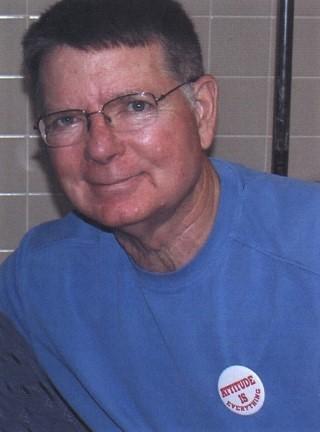
Donald Dodt photo Mecklenburg County

Following a five-day jury trial, Donald Dodt, 76, originally of Cleveland, Ohio, was convicted of one count of conspiracy to commit wire fraud and mail fraud, two counts of mail fraud, eight counts of wire fraud, one count of conspiracy to commit international money laundering and 10 counts of international money laundering.

According to evidence presented at trial, Dodt worked in a call center in Costa Rica in which co-conspirators, who posed as representatives of the District of Columbia Department of Consumer and Regulatory Affairs and federal agencies, including the U.S. Federal Trade Commission, and who also posed as federal judges, contacted victims in the United States — primarily senior citizens – to tell them that that they had supposedly won a substantial “sweepstakes” prize.  After convincing victims that they stood to receive a significant financial reward, the co-conspirators told victims that they needed to make a series of up-front cash payments before collecting, purportedly for items like insurance fees, taxes and import fees.  Co-conspirators used a variety of means to conceal their true identity, such as Voice over Internet Protocol (VoIP) services provided by Dodt that made it appear that they were calling from Washington, D.C., and other places in the United States.

As the evidence presented at trial illustrated, Dodt was an integral part of this scheme in that he knowingly provided services that were necessary for the scheme to operate and that facilitated the concealment and, ultimately, success of the scheme for many years.  Specifically, Dodt provided and maintained VoIP phone technology and assigned phone numbers associated with locations in the United States through which members of the conspiracy were able to make the fraudulent calls to victims in the United States and conceal their identities and location.  Dodt specifically assigned virtual phone numbers with area codes associated with Washington, D.C., to make it appear that the calls originated from within the United States and that also bolstered conspirators’ misrepresentations that they were representatives of government agencies located in Washington.  Dodt also warned the co-conspirators if certain numbers were “hot” – i.e., there were customer complaints or law enforcement inquiries – and replaced those phone numbers with new phone numbers that the co-conspirators then used in furtherance of the scheme, the evidence showed.

Dodt and his conspirators stole more than $7 million from victims, the evidence showed.

Kansas’ next prison chief rebuked by judge in Idaho lawsuit

WICHITA, Kan. (AP) — Kansas Gov. Laura Kelly’s choice to be the next head of the state prison system was criticized by an Idaho judge earlier this year for giving “disingenuous” testimony as a top corrections official there in a lawsuit over access to execution records.

Jefferey Zmuda courtesy Idaho Dept. of Corrections

Kelly’s office has said Jefferey Zmuda has a “long record of success” during a 30-year career in the Idaho prison system, where he is now the deputy director. The Democratic governor announced his appointment as Kansas corrections secretary last week, and Zmuda is scheduled to take over July 1.

But over the past year, Zmuda has been entangled in a lawsuit in Idaho state court aimed at forcing the release of records relating to the execution of an inmate in 2011 and another in 2012. Idaho officials have kept finding more documents over the past year, despite previous assurances by Zmuda that all known records were collected.

While Zmuda can begin running the Kansas prison system this summer, his appointment must be confirmed by the Republican-controlled state Senate for him to stay on the job. The Legislature is out of session until January.

“These claims are deeply troublesome and if true, this administration has either learned nothing from their mistakes in thoroughly vetting nominees or are completely naïve,” said Senate President Susan Wagle, a Wichita Republican.

Earlier this month, the Senate rejected a Kelly nominee for the Kansas Court of Appeals, the state’s second-highest court, over his political tweets in 2017.

Zmuda is replacing Interim Secretary Roger Werholtz, who agreed to run the department temporarily when Kelly took office in January. He will take over a prison system that saw multiple riots in 2017 and 2018 and is plagued by short staffing.

Kelly spokeswoman Ashley All defended Zmuda, saying that he recognizes that Idaho’s prison system “could have done some things better” in the course of the lawsuit.

“However, he has worked with staff to conduct multiple searches for records to meet the court’s order,” All said.

In Idaho, corrections Director Josh Tewalt called Zmuda “a person of high integrity and a great leader.”

“He’ll wear the blame when it’s undeserved but will be the first one to share credit,” Tewalt said.

A University of Idaho professor sought the state’s execution records in 2017, and her request was mostly denied. She sued, accusing prison officials of withholding documents that included records showing how the state had obtained execution drugs.

Zmuda said in an affidavit taken in July 2018 that state officials had collected “all known documents” related to the executions.

District Judge Lynn Norton, based in the Idaho’s state capital of Boise, ruled in March that the prison system acted frivolously and in bad faith in mostly denying the professor’s request for records.

The judge also concluded that officials had not conducted a diligent search for records before Zmuda filed his affidavit. Court records show that Zmuda emailed corrections employees the day after, directing them to search for documents.

“The emphasis on the word ‘known’ in a sworn affidavit filed with this Court is disingenuous,” Norton wrote.

In his affidavit, Zmuda acknowledged record-keeping problems, saying “we have previously failed to organize documents properly.”

___

Springfield abortion-issue protesters clash, arrests made

SPRINGFIELD, Mo. (AP) — Police in southwestern Missouri say five people were arrested when a fight broke out among abortion-rights advocates and anti-abortion protesters in the Springfield town square.

The clash occurred Friday after more than 100 people showed up at the square to protest as a St. Louis judge considered the fate of Missouri’s only abortion provider. The judge later ruled that Planned Parenthood’s St. Louis clinic can continue providing abortions despite the Missouri health department’s refusal to renew its license.

Police said the fight broke out toward the end of the demonstration. Police arrested four men ranging in age from 19 to 34 and an 18-year-old woman on suspicion of assault, resisting arrest and assaults on officers seeking to break up the fight.

Police did not detail how the fight began. No serious injuries were reported.

TSA now allows flyers to travel with drug derived from marijuana

WASHINGTON (AP) — The Transportation Security Administration has changed its cannabis policy to allow passengers to travel with some forms of CBD oil and a drug derived from marijuana that has been approved by the Food and Drug Administration.

All forms of marijuana were previously prohibited in carry-on bags and checked luggage. This week, the TSA updated its “What Can I bring?” guidance under medical marijuana. The FDA in June legalized a drug called Epidiolex, which is used to treat epilepsy in children. The TSA said in a statement that it was recently made aware of the drug and updated the regulations to avoid confusion on whether families can bring it when traveling.

The new policy also includes some CBD oil, “as long as it is produced within the regulations defined by the law” under the 2018 Farm Bill, which legalized hemp and hemp derivatives. Hemp-derived CBD is low in or has no THC, the chemical that produces a high found in marijuana.

The TSA’s new rules still ban other forms of marijuana, including CBD oils that have THC, and cannabis-infused products that are still illegal under federal law.

It’s not clear how agents will determine the difference. But while agents screen for potential threats to planes and passengers, they do not search for marijuana or other illegal drugs. If they come across anything suspect, they refer it to law enforcement.

The change in TSA’s cannabis policy was first reported by Marijuana Moment.

10 Years After Dr. Tiller’s Murder, Kansas’ Abortion Rules Could Take Another Turn

Exactly 10 years ago, on May 31, 2009, an anti-abortion zealot gunned down ob/gyn and reproductive rights advocate George Tiller as he was distributing literature in the foyer of his Wichita church.

His murder marked the culmination of 18 years of militant anti-abortion protests that began with massive demonstrations in Wichita in June 1991. Protestors blockaded abortion clinics for weeks during the “Summer of Mercy,” police made more than 2,600 arrests and a judge ordered U.S. marshals to keep the gates of Tiller’s clinic open.

“That horrible event,” Woody added, referring to Tiller’s assassination, “there had definitely been a lot of violent talk leading up to it.”

Dr. George Tiller was killed by an anti-abortion activist on May 31, 2009.
CREDIT COURTESY OF TRUST WOMEN FOUNDATION

Because Tiller was one of the few doctors in the nation who performed third-trimester abortions, he drew patients from all over the country and even from abroad. That put him in the crosshairs of abortion opponents, who called him “Killer Tiller” and bombed his Wichita clinic. In 1993, an anti-abortion activist shot him in both arms, although Tiller went back to work the next day.

Because Kansas is now one of the most restrictive states in the country when it comes to abortion access, it’s often forgotten that it used to be one of the most liberal.

“We certainly saw an uptick in anti-choice legislation after the Summer of Mercy,” said Julie Burkhart, a protégé of Tiller and founder and CEO of Trust Women in Wichita, an abortion clinic and reproductive rights organization. “Before, Kansas virtually had no restrictions on the books. You started to see a more punitive state government afterward.”

In fact, in 1973 — the year the U.S. Supreme Court decided Roe v. Wade — more abortions were performed in Kansas than in Missouri, Arkansas Iowa, Nebraska and Oklahoma combined.

“Kansas, historically, had been liberal on personal rights,” Woody said. “Didn’t want the government interfering in people’s personal business. I think Kansas has been that way for a long time and this (abortion) became an exception.”

But the pendulum may be swinging back. A landmark decision by the Kansas Supreme Court last month could spell the undoing of many of Kansas’ abortion requirements.

Current restrictions

The tide began to turn with the Summer of Mercy, which set the stage for the state’s political realignment.

Kansas has since banned abortions after 20 weeks of pregnancy, unless the life of the mother is endangered or her health is severely compromised. Public funding can only be used for abortion in cases of rape, incest, or where the woman’s life is at risk. 

The enactment of a host of further restrictions on doctors and clinics have left all but Johnson and Sedgwick counties without an abortion provider:

  • Abortion providers must have admitting privileges at a nearby hospital and their facilities must meet some of the same physical standards as ambulatory surgery centers.
  • Doctors are prohibited from administering drug-induced abortions remotely through telemedicine.

Abortion providers also must make specific disclosures to their patients, including:

  • Informing patients that an abortion will “terminate the life of a whole, separate and unique human being” and that fetuses feel pain.
  • Informing patients of their credentials, any disciplinary actions meted out against them and whether they have malpractice insurance. Those disclosures must be provided at least 24 hours before an abortion and printed on white paper in black 12-point, Times New Roman font.

Gov. Laura Kelly, a Democrat elected in November, vetoed another disclosure requirement Kansas lawmakers passed this year. That would have forced abortion providers to tell women that a drug-induced abortion can be reversed.  

Women, too, face requirements to get an abortion in Kansas:

  • State-directed counseling
  • A 24-hour waiting period
  • Fetal ultrasound
  • Dual parental consent for minors

The linchpin?

Notably, there’s one other restriction on Kansas’ books that may, in time, prove to be the undoing of the state’s stringent abortion regimen.

In 2015, Kansas became the first state to pass a law prohibiting the common second-trimester abortion procedure known as “dilation and evacuation” — or what abortion opponents describe as “dismemberment abortions.” Then-Gov. Sam Brownback, a Republican and vehement abortion opponent, signed the bill, which was viewed as a triumph by abortion rights opponents.

The law was immediately challenged by two Overland Park physicians, Herbert Hodes and his daughter, Traci Nauser, who operate one of four abortion clinics in the state. A lower court blocked the law from taking effect and in January 2016, the Kansas Court of Appeals upheld that decision. The state then took the case up to the Kansas Supreme Court.

Kansas argued that federal case law allowed it “to voice its profound respect for life and human dignity” by regulating or even limiting some abortion methods “that society finds inhumane and objectionable when safe alternatives exist.”

Hodes and Nauser countered that the law intruded on the doctor-patient relationship and that alternatives to the dilation and evacuation (D&E) procedure were invasive and medically unnecessary.

That set the stage for the Kansas Supreme Court to hand down one of the most momentous decisions in its 150-plus-year history.

On April 26, the high court struck down the D&E restriction, ruling that a woman’s right to abortion is rooted in the Kansas Constitution’s Bill of Rights.

For that reason, the court said, abortion restrictions must withstand “strict scrutiny.” The court sent the D&E law back to the lower court to determine if it meets that test.

“At the heart of [Section 1 of the Kansas Bill of Rights] is the principle that individuals should be free to make choices about how to conduct their own lives, or, in other words, to exercise personal autonomy,” the court pronounced in its sweeping decision. “Few decisions impact our lives more than those about issues that affect one’s physical health, family formation, and family life.”

The decision was hugely consequential for two reasons. First, it meant that even if Roe v. Wade is overturned by the U.S. Supreme Court, the right to abortion in Kansas will remain intact. And second, because laws limiting abortion access will now be subject to strict scrutiny — meaning the state must show they’re “narrowly tailored to promote” a “compelling interest” — the state’s abortion laws are almost certain to face new court challenges.

In fact, a pending court challenge to the state’s ban on telemedicine abortions was bolstered by the Supreme Court’s ruling; the attorney general’s office last week had no choice but to withdraw its argument that women have no right to an abortion under the state constitution.  

“The court now has the opportunity to rule taking the Supreme Court opinion into consideration,” Burkhart, whose Trust Women clinic challenged the law. “So I think what we’re looking at is seeing how this case unfolds and developing our strategy in terms of the other punitive laws that are on the books.”

But Burkhart said she’s not resting easy.

Abortion rights opponents have vowed to push to amend the state constitution to undo the Kansas Supreme Court holding.

Dan Margolies is a senior reporter and editor in conjunction with the Kansas News Service. You can reach him on Twitter @DanMargolies.

Kansas dance team mom dismissed from discrimination lawsuit

OVERLAND PARK, Kan. (AP) — A Kansas woman has been dismissed from an ongoing lawsuit alleging a member of a high school dance team was dismissed because of racial discrimination.

Photo courtesy Blue Valley Northwest Dazzlers

Katie Porter was named in a lawsuit filed in January by Camille Sturdivant, a former member of the Blue Valley Northwest Dazzler dance team. Porter’s daughter was on the team.

Sturdivant alleged she was ostracized from team events after she reported racial discrimination by dance coach Carley Fine and choreographer Kevin Murakimi.

The district fired Fine after the allegations were raised.

The lawsuit alleged Porter participated in excluding Sturdivant because of her race.

The Kansas City Star reports court documents show a federal judge dismissed the claims against Porter Thursday.

The judge on Thursday denied a similar motion for dismissal filed by Fine.

Missouri limits local regulations on large livestock farms

JEFFERSON CITY, Mo. (AP) — Missouri Gov. Mike Parson has signed legislation preventing local officials from enacting more stringent regulations than the state on large farms that raise hogs, poultry and cattle.

The Republican governor described the bill enacted Friday as “a big win for Missouri farmers, ranchers, and agribusinesses.” Parson raises cattle.

Opponents have criticized the measure for taking away local control and have said it could hurt the quality of life for neighbors worried about air and water pollution from concentrated animal feeding operations.

University of Missouri Extension says at least 20 counties already have imposed regulations and fees on animal feeding operations through local health ordinances, and nine counties and townships have enacted zoning regulations.

Parson plans a ceremonial bill signing June 8 in Sedalia at the Missouri Cattlemen’s annual steak fry.

Missouri teen dies after ejected when SUV overturns

CAMDEN COUNTY — One person was injured in an accident just after 5a.m. Friday in Camden County.

The Missouri State Highway Patrol reported a 1997 Chevy Tahoe driven by Levi A. Capek, 19, Climax Springs, was eastbound on Knob Hollow Road just east of Fiery Fork Road. The driver lost control of the SUV and it began to skid. It traveled off the left side of the road, struck an embankment, returned to the road, overturned and the driver was ejected.

Capek was pronounced dead at the scene. He was not wearing a seat belt, according to the MSHP.

Judge: Missouri’s only abortion clinic can keep doing abortions

ST. LOUIS (AP) — A judge issued an order Friday ensuring Missouri’s only abortion clinic can continue providing abortions, acting just hours before the St. Louis Planned Parenthood facility’s license was set to expire.

The Missouri Department of Health and Senior Services had said it would not renew the clinic’s license, citing concerns with “failed abortions,” compromised patient safety and legal violations at the clinic. Agency officials also insisted upon interviewing additional physicians at the clinic as part of an investigation.

With the license set to expire at midnight Friday, Planned Parenthood pre-emptively sued this week and argued that the state was “weaponizing” the licensing process.

Planned Parenthood had said that absent court intervention, Missouri would become the first state without an abortion clinic since the U.S. Supreme Court’s 1973 Roe v. Wade ruling that legalized the procedure nationwide. St. Louis Circuit Judge Michael Stelzer issued a temporary restraining order preventing Missouri from taking away the clinic’s license.

He said Planned Parenthood “has demonstrated that immediate and irreparable injury will result” if its abortion license is allowed to expire.

The clinic’s license “shall not expire and shall remain in effect” until a ruling is issued on Planned Parenthood’s request for a permanent injunction, according to Stelzer’s ruling. A hearing is set for Tuesday morning. The nearest clinic performing abortions is just across the Mississippi River in Granite City, Illinois, less than 10 miles  from the Planned Parenthood facility in St. Louis.

Planned Parenthood’s abortion clinic in the Kansas City area is in Overland Park, Kansas, just 2 miles  from the state line.

State figures show a handful of Missouri hospitals also perform abortions, but those are relatively rare. The fight over the clinic’s license comes as lawmakers in conservative states across the nation are passing new restrictions that take aim at Roe.

Abortion opponents, emboldened by new conservative justices on the Supreme Court, are hoping federal courts will uphold laws that prohibit abortions before a fetus is viable outside the womb, the dividing line the high court set in Roe. Louisiana, Georgia, Kentucky, Mississippi and Ohio have enacted bills barring abortion once there’s a detectable fetal heartbeat, as early as the sixth week of pregnancy.

Missouri lawmakers recently approved an eight-week ban on abortion. Alabama’s gone even further, outlawing virtually all abortions, even in cases of rape or incest. None of the bans has taken effect, and all are expected to face legal challenges. “Today is a victory for women across Missouri, but this fight is far from over,”

Planned Parenthood Federation of America CEO Dr. Leana Wen said in a statement. “We have seen just how vulnerable access to abortion care is here — and in the rest of the country.” The number of abortions performed in Missouri has declined every year for the past decade, reaching a low of 2,910 last year. Of those, an estimated 1,210 occurred at eight weeks or less of pregnancy, according to preliminary statistics from the state health department.

Missouri women also seek abortions in other states. In Kansas, about 3,300 of the 7,000 abortions performed in 2018 were for Missouri residents, according to the state’s health department. Illinois does not track the home states of women seeking abortions.

___

ST. LOUIS (AP) — A St. Louis judge is weighing whether to grant an order allowing Missouri’s only abortion clinic to remain open, a day after abortion-rights protesters were arrested at a state office building. Judge Michael Stelzer heard arguments Thursday on Planned Parenthood’s request for a temporary restraining order that would prohibit Missouri from allowing the St. Louis clinic’s abortion license to lapse. It isn’t clear when Stelzer will rule. The license expires at midnight. Missouri’s health department cites concerns about patient safety and legal violations. Planned Parenthood says Missouri is “weaponizing” the licensing process.

The St. Louis Post-Dispatch reports that about a dozen protesters were arrested after refusing to leave the building where Republican Gov. Mike Parson has an office. Those arrested included an alderwoman and Planned Parenthood board members. ——— ST. LOUIS (AP) — A judge is deciding whether to ensure Missouri’s only abortion clinic can keep its license past Friday, the latest development in a decades-long push by abortion opponents to get states to enact strict rules on the procedure. Like many states, Missouri over the years enacted a series of regulations, ranging from waiting periods before women can receive abortions to rules on the width of clinic doors. Abortion-rights supporters say the rules are arbitrary and are intended to shutter abortion clinics, while abortion opponents say they’re aimed at protecting women and ensuring proper patient care. It’s not a “pro-life issue at all,” Missouri Republican Gov. Mike Parson said in defending the state’s reluctance to renew Planned Parenthood’s license to perform abortions at a St. Louis clinic. “This is about a standard of care for women in Missouri, whether it’s this clinic or any other clinic or any other hospital, they should have to meet the same standard.” Parson recently signed a bill that bans abortions on or beyond the eighth week of pregnancy, with exceptions for medical emergencies but not for rape or incest. But even before that law takes effect Aug. 28, strict regulations in Missouri have limited access to the procedure, according to abortion-rights supporters. A judge in St. Louis will determine whether to grant a request from Planned Parenthood for a temporary restraining order that would stop the state from allowing the license for Missouri’s only abortion clinic to lapse. (May 30) Planned Parenthood says a Missouri law requiring physicians who provide abortions to partner with a nearby hospital, which many hospitals have been unwilling to do, resulted in a Columbia clinic losing its license to perform abortions in 2018. That left the St. Louis clinic as the only one providing the procedure. If the St. Louis clinic’s license is not renewed before it expires at midnight Friday, Planned Parenthood officials said Missouri would become the first state without a functioning abortion clinic since the 1973 Roe v. Wade Supreme Court decision legalizing abortion. Circuit Judge Michael Stelzer heard an hour of arguments Thursday on Planned Parenthood’s request for a temporary restraining order that would prohibit the state from allowing the license to lapse. It isn’t clear when Stelzer will rule. The hearing happened as abortion-rights supporters rallied elsewhere in downtown St. Louis. The Department of Health and Senior Services said March inspections at the clinic uncovered deficiencies. The agency cited “at least one incident in which patient safety was gravely compromised.” It also cited what it called “failed surgical abortions in which women remained pregnant,” and an alleged failure to obtain “informed consent.” The nearest clinics performing abortions are in a Kansas suburb of Kansas City and in Granite City, Illinois, just across the Mississippi River from St. Louis. The Kansas clinic is about 260 miles (420 kilometers) from St. Louis. The number of abortions performed in Missouri has declined every year for the past decade, reaching a low of 2,910 last year. State figures show a handful of Missouri hospitals also perform abortions, but those are rare. Missouri women also seek abortions in other states. In Kansas, about 3,300 of the 7,000 abortions performed in 2018 were for Missouri residents, according to the state’s health department. Illinois does not track the home states of women seeking abortions. When women first meet with physicians about abortion, Missouri law mandates that they are given a 22-page booklet with information about fetal development, alternatives to abortion and a statement that “abortion will terminate the life of a separate, unique, living human being.” After that initial consultation, women must wait at least 72 hours before they can receive an abortion. Missouri regulations also require pelvic exams before abortions. Planned Parenthood’s lawsuit alleges that the health department recently interpreted the longstanding rule to apply to medication-induced abortions, not just surgical ones. Doctors at the St. Louis clinic refused to perform pelvic exams on women before medication abortions, so the facility now offers only surgical abortions. Pelvic exams also were a sticking point in the clinic’s latest attempt to renew its license. Planned Parenthood says it performed the exams right before surgical abortions. The health department says those must occur 72 hours prior. The agency says Planned Parenthood last week agreed to change its policy. National Abortion Federation Interim President and CEO Katherine Ragsdale said other regulations on abortion facilities “tend to be things like the size of the janitorial closet or the height of the water fountains.” “It’s clearly just a tool to try to make abortion unavailable,” she said. ___ ST. LOUIS (AP) — A hearing is scheduled in a St. Louis court Thursday on an effort by the only abortion clinic in Missouri to retain its license after the state raised concerns about care there. Planned Parenthood sued the state Tuesday, saying it may be forced to stop providing abortions at its St. Louis facility because the state is threatening not to renew its license to perform them. Missouri’s health department is citing failed abortions, compromised patient safety and legal violations as it pressures the state’s only abortion clinic to come into compliance or lose its license, which expires Friday.

Kan. Hospital Agrees to Pay $250K To Settle False Claims Act Allegations

KANSAS CITY, KAN. – U.S. Attorney Stephen McAllister announced Friday that Coffey Health System has agreed to pay the U.S. government $250,000 to settle claims that it violated the False Claims Act.

Coffey Health System google image

Coffey Health System (“CHS”) operates a twenty-five bed critical access hospital located in Burlington, Kan. The United States alleged that Coffey Health System falsely attested that it conducted and/or reviewed security risk analyses in accordance with requirements under a federal incentive program for the reporting periods of 2012 and 2013.

The government contended that the hospital submitted false claims to the Medicare and Medicaid Programs pursuant the Electronic Health Records (EHR) Incentive Program. The American Recovery and Reinvestment Act of 2009 established the program to encourage healthcare providers to adopt and demonstrate their “meaningful use” of EHR technology. Under the program, the U.S. Department of Health and Human Services (HHS) offers incentive payments to healthcare providers that adopt certified EHR technology and meet certain requirements relating to their use of the technology. To obtain the payments, providers must attest that they satisfy applicable HHS-adopted criteria, including measures for analyzing and addressing security risks to electronic health records.

“Medicare and Medicaid beneficiaries expect that providers ensure the accuracy and security of their electronic health records,” said United States Attorney Stephen McAllister. “This office remains committed to protecting the federal health programs and to hold accountable those whose conduct results in improper payments.”

Steve Hanson, Special Agent in Charge, U.S. Department of Health and Human Services, Office of Inspector General, Kansas City Region, stated, “Providers who fail to properly ensure the security of electronic health records must be held accountable.”

The settlement announced today resolves allegations in a lawsuit filed by Bashar Awad and Cynthia McKerrigan, in the United States District Court for the District of Kansas. The lawsuit was filed under the qui tam, or whistleblower, provisions of the False Claims Act, which permit private individuals to sue on behalf of the government for false claims and to share in any recovery. The Act also allows the government to intervene and take over the action; Awad and McKerrigan will receive approximately $50,000.

This matter was investigated by the U.S. Department of Health and Human Services – Office of the Inspector General (HHS-OIG) and the United States Attorney’s Office for the District of Kansas. The United States was represented by Assistant U.S. Attorney Jon Fleenor.

Copyright Eagle Radio | FCC Public Files | EEO Public File