TOPEKA, Kan. (AP) — The Kansas Board of Regents has appointed a committee to study how legalization of same-sex marriage could affect state universities.
Regent Fred Logan said Wednesday he expects the U.S. Supreme Court to issue a ruling that will “at a minimum” require states to recognize same-sex marriages performed in other states. Or he says the court could strike down state bans on the marriages.
The Lawrence Journal-World reports if that happens, universities will have to consider issues including health insurance and benefits for employees and student housing policies.
Several Kansas counties are granting marriage licenses to same-sex couples but the state is not recognizing those marriages.
TOPEKA, Kan. (AP) — Republican Gov. Sam Brownback’s administration is proposing to revise hiring, layoff and termination policies for Kansas government workers and possibly eliminate longevity bonuses for 17,500 employees.
The Topeka Capital-Journal reports (http://bit.ly/1Dj3T78 ) that the state Department of Administration on Wednesday described the initiatives modernizing state policies.
One proposal that requires the Legislature’s approval would give state agencies broader authority to hire employees into non-civil service positions rather than keep those jobs in the civil service system.
Secretary of Administration Jim Clark said a new policy would emphasize performance rather than seniority in selecting employees to be presented with pink slips and when rehiring occurs.
He said lawmakers will be asked to fund annual longevity bonuses or cancel them, rather than forcing agencies to eat the costs from existing dollars.
TOPEKA, Kan. (AP) — A Kansas Senate committee is preparing to consider a ban on a procedure used in 8 percent of the abortions performed in the state.
The bill up for debate Thursday in the Public Health and Welfare Committee was drafted by abortion opponents who describe the targeted procedure as dismembering a fetus.
The bill would prohibit a procedure known as dilation and evacuation and designate it in state law as a “dismemberment abortion.” Doctors would not be allowed to use forceps, clamps or other similar instruments to cut up a fetus and remove it from the womb in pieces.
Abortion rights advocates say the procedure is sometimes the safest way to terminate a pregnancy and also is sometimes used during the first trimester.
Republican Gov. Sam Brownback supports the measure.
TOPEKA, Kan. (AP) — Kansas lawmakers are considering changing the way state Supreme Court justices are selected, but lawyers say the move would politicize the court.
The House Judicial Committee conducted a hearing Wednesday on two measures that would amend the Kansas Constitution. One change would select Supreme Court justices in partisan elections, while the other would allow the governor to appoint them.
Representatives of three lawyers’ associations told panel that either change would weaken the independence of the judiciary.
Applicants for Supreme Court vacancies are currently screened by a nominating commission led by attorneys. The commission names three finalists, and the governor picks one.
Any amendment to the constitution must be approved by a two-thirds vote in both chambers of the Legislature and passed by a majority in a statewide referendum.
WASHINGTON (AP) â Ahead of Sunday’s deadline, officials say consumers are stepping up to enroll for 2015 coverage under President Barack Obama’s health care law.
Sign-up centers haven’t seen the same long lines as last year, but volunteers from Austin, Texas, to Columbus, Ohio, report a surge of interest this week.
An update from the Obama administration on Wednesday showed enrollment started picking up last week.
All told, 7.7 million people had signed up for subsidized private insurance in the 37 states served by the federal HealthCare.gov site as of February 6. That’s not counting states that run their own insurance markets.
But not everything was rosy â administration numbers show monthly premiums rose an average of 8 percent in the federal market states. After subsidies, that’s a $23-a-month increase from last year.
Photo by Phil Cauthon Susan Mosier, acting secretary of the Kansas Department of Health and Environment, is scheduled to speak Wednesday at a legislative hearing on a bill that would change state regulation of mental health drugs for Medicaid patients.
By Dave Ranney
In Kansas, the state’s Medicaid program tells doctors which medications they can prescribe for heart disease, diabetes, asthma or cancer. It’s been that way for as long as most policymakers can remember.
Mental health drugs are different. Since 2002, state law has allowed Medicaid patients access to whatever behavioral health drugs their physician or psychiatrist sees fit to prescribe.
Gov. Sam Brownback’s administration wants to change that.
During a recent appearance before the House Social Services Budget Committee, Kansas Department of Health and Environment Acting Secretary Susan Mosier said mental health drugs ought to be subject to the same or similar scrutiny as drugs used to treat physical health issues.
“With the (state) statute that’s currently in place, we have no ability to manage behavioral health drugs like we do any other drug class,” Mosier said.
Regulating mental health drugs, she said, will lead to better health care outcomes and allow the state to rein in some of its ever-increasing Medicaid costs.
Controlling costs
According to KDHE records, the state’s Medicaid program spent $92.1 million on mental health drugs in 2013.
The state’s mental health advocates say that while restricting access to the behavioral health drugs may result in some short-term savings, it also could wreak havoc with the lives of many patients and their families.
The long-term costs associated with this havoc — emergency room visits, admissions to one of the state-run psychiatric hospitals, prison sentences — will outweigh any short-term savings, they say.
“What this all boils down to is money,” said David Wiebe, president of the Kansas Mental Health Coalition advocacy group and recently retired executive director of the Johnson County Mental Health Center.
“Our concern is, and always has been, that the best choice of drug therapy decisions are made between the prescriber and the consumer; not by someone who’s looking at a piece of paper somewhere saying, ‘No, you have to try this (drug) first because it’s cheaper,’” Wiebe said.
On Wednesday, the Senate Public Health and Welfare Committee is scheduled to have an hourlong hearing on Senate Bill 123, an administration-backed measure to repeal the protections now in state statute.
At least 20 opponents — a mix of advocates, lobbyists, consumers and family members — have signed up to testify. Mosier is expected to outline KDHE’s concerns as well.
SB 123 consists of two sentences. The first says it would repeal current law; the second says the repeal would “take effect and be in force” upon its publication in the state statute book, meaning July 1.
The bill does not indicate how behavioral health drugs would be regulated if the current law were to be repealed. That would depend on new rules and regulations to be developed by the state’s Medicaid agencies.
“We’ve picked up clues from testimony in various committees, and (Department for Aging and Disability Services Secretary) Kari Bruffett came to one of our meetings and spoke in rather general terms about their concerns,” said Amy Campbell, director of the Kansas Mental Health Coalition. “But at this point, it’s absolutely unclear what the (administration’s) initiatives are.”
Mosier has said KDHE supports exposing behavioral health drug prescriptions to prior authorization, preferred drug lists, step therapies that require patients to fail on one drug before being prescribed another and “hard and soft safety edits.”
“Soft edits” would allow the three managed care organizations now charged with administering the state’s Medicaid program to call questionable prescriptions to the attention of their patients’ pharmacists, who would review the prescription and uphold or overrule the company’s concern.
A “hard edit” would require physicians to first check with the managed care organizations before filling certain psychotropic medications.
According to KDHE projections, tighter regulation of behavioral health drugs would save the state $8.3 million.
Mosier and Bruffett have assured legislators that if SB 123 were to pass, patients with chronic and persistent mental illnesses would be exempt from any prior authorization requirements. And the managed care companies, they said, would not change any current patient’s drug regimen if it’s considered successful.
To buttress their case, administration officials have cited concerns raised in a 2009 report by the now defunct Kansas Health Policy Authority. Among its findings:
More than 200 children enrolled in the state’s Medicaid program had been prescribed and were thought to be taking five or more psychotropic medications.
Many psychotropic drugs prescribed for children were “off-label” prescriptions that in subsequent studies had been linked to side effects that included inordinate weight gain, obesity, diabetes and increased risk of suicide.
More than half of the children in the state’s foster care system were known to be taking mental health medications, either antipsychotics or antidepressants.
Almost two-thirds of the mental health drugs in Kansas were prescribed by general practice physicians and other medical professionals rather than psychiatrists.
In recent months, similar concerns have been raised about mental health drugs being inappropriately prescribed to control the behavior of some Kansas nursing home residents.
The health policy authority was a semi-autonomous state agency created by former Gov. Kathleen Sebelius to develop state health care policies. Gov. Sam Brownback and the Legislature shut it down in 2011. It was replaced by the Division of Health Care Finance within KDHE.
National debate
The state’s community mental health centers oppose SB 123.
“The thing that we’re trying to get people to understand is that when someone has a psychotic episode, it doesn’t affect just them. It affects everyone around them,” said Kyle Kessler, executive director of the Association of Community Mental Health Centers of Kansas. “It affects their families, their community, their hospital, their community mental health center and local law enforcement, probably. And there are costs associated with every one of those encounters.
“So you stand back and say, ‘We can save $1,000 by putting this person on this medication instead of that medication,’” he said. “But that doesn’t take into consideration how changing that person’s medication may have caused them to stop taking it because they’d been on it before and they hated it, and then they’re hospitalized, which ends up costing the system $10,000.”
Kessler said his members doubt that passing SB 123 will generate the $8.3 million savings the administration has predicted.
“The last time we had this discussion with the Legislature was in 2010, and the health policy authority was saying this would save the state $800,000. So, somehow, that figure increased tenfold in less than five years,” Kessler said.
Most state Medicaid programs regulate access to mental health drugs, Kessler said. Kansas is one of about a dozen states that does not.
North Carolina’s Medicaid program regulates its patients’ access to behavioral health drugs. “We went to what’s called a ‘fail first policy’ last year,” said David Swann, a former director at Crossroads Behavioral Healthcare, a regional mental health center in North Carolina. He later ran the region’s managed care company.
“It means we want you to try a cheaper drug first to see if it works,” he said. “If it doesn’t, you can move on to whatever’s the next most expensive.” The change in policy, he said, reduced expenditures for behavior health drugs but increased costs overall.
“When you’re having this discussion in Kansas, you need to ask yourselves what it is you hope to accomplish,” Swann said. “Because if the goal is to reduce your Medicaid pharmacy budget, this will do that. “But if your goal is to save Medicaid money overall, this isn’t likely to do that, because some of the people we’re talking about here are not going to do well on the more conventional medications.
They’re going to relapse, and they’re going to have acute episodes. Some of them are likely going to end up being hospitalized, and that’s going to cost you more than what you’re going to save on prescriptions.” Andrew Sperling, director of legislative advocacy with the National Alliance on Mental Illness office in Washington, D.C., has been following the deliberations in Kansas and other states that have considered or are considering the repeal of laws that prohibit restrictions on mental health drugs. Kansas, he said, should resist repealing its protections. “
You want to have a process in place that allows a physician to work with individual patients, to work with the different comorbidities that they’re experiencing and with their individual histories of which medication works best for them,” Sperling said. “Restricting access to that full range of therapies is not helpful and will actually cost you more in the long run, because we know that when people don’t get access to the treatment they need or they’re not adhering to treatments, you get bad outcomes that are more expensive,” he said. Matt Salo, executive director of the National Association of Medicaid Directors, also is monitoring the Kansas debate from Washington, D.C.
He said tighter regulation of mental health drugs is about more than saving money. “The current state of affairs in Kansas is that there are no rules, no real ability to manage access or costs,” he said. “That’s really a recipe for unnecessary care and unnecessary utilization. It isn’t good from the perspective of patient health or the program’s bottom line.” Salo said his association is especially troubled by the reports of young children being prescribed antipsychotics and some children in foster care taking five or more psychotropic medications.
“That’s a real problem,” he said. “I think it’s safe to say there needs to be some common-sense parameters in place that would kind of force a conversation that would start with, ‘Oh, hey, are you sure you really want to be prescribing this drug to this patient?’”
Salo said he hoped Kansas legislators, policymakers and mental health advocates are able to find some middle ground. “You need to find that sweet spot,” he said. “You want the relationship between the physician and patient to be strong, but at the same time you need to recognize that there is a role in this for thoughtful and science-informed guidance.
“You can have policies that say that for X drug where the science is unquestionably good for these patients, let’s get him access without any hurdles,” Salo said. “But for X,Y and Z drugs where there are 14 different drugs in a category and they’re all pretty much scientifically proved to be equivalent, then it’s probably OK to be thinking about what kind of parameters you want to put in there.”
The problem for advocates is that the “sweet spot” that Salo said should be the goal of Kansas policymakers lies in the regulations. And those regulations won’t be written until after the protections now in place have been repealed.
Dave Ranney is a reporter for Heartland Health Monitor, a news collaboration focusing on health issues and their impact in Missouri and Kansas.
TOPEKA, Kan. (AP) — An autopsy report shows the 39-year-old driver in an August traffic accident that killed him and his teenage passenger had a blood-alcohol level of more than twice the legal limit.
The Topeka Capital-Journal reports James Ford Bowen of Paxico and his passenger, 16-year-old Matthew Robert Allen of Topeka, died of blunt force injuries.
Police say they were killed when the 2000 Toyota SUV Bowen was driving at 12:43 a.m. Aug. 4 hit an unoccupied 2012 Jeep Grand Cherokee parked on a Topeka street.
Both were pronounced dead at the scene at 12:49 a.m. Bowen’s autopsy showed his blood-alcohol level was .177 when he died.
Bowen had been paroled three days earlier after serving time on four convictions for forgery and one for theft, all committed in 2006.
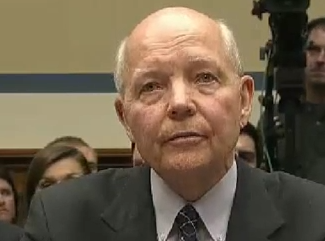
WASHINGTON (AP) — Pressured by Congress, the IRS has apologized for seizing banks accounts from otherwise law-abiding business owners simply because those owners structured bank transactions to avoid federal reporting requirements.
The alleged crime was that they routinely made bank deposits of less than $10,000. That allowed the business owners to avoid reporting requirements designed to catch drug dealers and money launderers.
IRS Commissioner John Koskinen told Congress Wednesday that the IRS is changing policies to prevent the seizures, as long as the money came from legal means.
By law, bank transactions above $10,000 must be reported to the IRS. It’s a felony to structure deposits to avoid the reporting requirement, even if the money is legally earned.
In some cases, the IRS seized and held bank accounts for years without bringing charges.
Capt. John HotzStarting next month the Missouri State Highway Patrol will have a new director for its Public Information and Education Division in Jefferson City.
Colonel Ron Replogle, superintendent of the Patrol, announced the promotion of Lieutenant John Hotz to the rank of captain effective March 1, 2015.
Hotz was appointed to the Patrol on July 1, 1989. After graduating from the Law Enforcement Academy, he was assigned to Troop A, Zone 7, Bates County. In 1994, Hotz was promoted to corporal and designated assistant zone supervisor of Zone 5, Ray and Carroll counties.
Hotz was promoted to sergeant in 1998, and transferred to Troop A Headquarters as a public information and education officer. On August 1, 2006, he was promoted to lieutenant and designated assistant director of the Public Information and Education Division.
Hotz was born in Camden, New Jersey. He graduated from Lowndes County High School, Valdosta, GA, in 1985. In 1989, he graduated with a bachelor’s of science degree in criminal justice from the University of Southern Mississippi, in Hattiesburg, MS. Capt. Hotz and his wife, Paula, have two children: James and Emily.

 TOPEKA, Kan. (AP) — The Kansas Board of Regents has appointed a committee to study how legalization of same-sex marriage could affect state universities.