We have a brand new updated website! Click here to check it out!

Kan sees significant increase in Medicaid-CHIP enrollment, Mo, Neb are down

kdheBy Mike Shields
KHI News Service

TOPEKA — Unlike its neighboring states of Missouri and Nebraska, where significant decreases have been reported, Kansas has seen a significant jump in the number of people enrolled in its Medicaid-CHIP programs, even without loosening its relatively tight eligibility standards.

According to a new report from the Kansas Department of Health and Environment, enrollment in the programs – together branded as KanCare – rose in April to a historic high of 426,642 people, or roughly one in seven Kansans. That’s up from 396,374 in April 2013.
KanCare provides health coverage for adults who are poor and elderly or disabled. It also covers children and pregnant women from low-income families. KanCare is paid for mostly by the federal government, but the state covers about 43 percent of the cost, making it one of the single largest areas of spending for Kansas government at $3.2 billion a year, of which about $1.3 billion is state money.

KDHE officials attributed the increase in enrollment largely to the Affordable Care Act, commonly known as Obamacare. The federal law, since January, requires that most people obtain health insurance or pay a tax penalty. Federal subsidies are available for most people who earn too much to qualify for Medicaid but otherwise can’t afford private insurance premiums. The law originally included provisions requiring states to expand Medicaid eligibility to provide coverage for the poorest adults, but the U.S. Supreme Court later ruled that was an option for each state to decide.

Unlike their counterparts in states such as New York, California, Oregon and Colorado, Kansas policymakers chose against easing Medicaid enrollment restrictions, so the increases here are modest by comparison to those seen in most of the 26 expansion states.

Bigger than Texas

But compared to several other states where Republican lawmakers nixed liberalization of Medicaid income restrictions, Kansas’ sharp enrollment increase stands out.
For example, Texas is a much larger state thought to have the nation’s highest rate of uninsured people at nearly one in four.

Between Oct. 1, 2013, and March 31, 2014, when open enrollment in the health insurance marketplace ended, Medicaid-CHIP enrollment in the Lone Star State increased by only 3,214. The increase in Kansas over the same period was 22,498. And the numbers for April show an even greater spike.

Federal officials reported drops in Medicaid-CHIP enrollment in only seven states during that time frame. All seven chose against Medicaid expansion.

Missouri, Nebraska and Louisiana were among those that reported decreases between October and March, though in at least the case of Nebraska the decrease is expected to be short-lived.

“We believe the decrease … is a temporary anomaly,” said Russ Reno, a spokesman for the Nebraska Department of Health and Human Services. “The most recent data available, April 2014, shows an increase in enrollment from February 2014. Going forward, the department expects continued upward movement in enrollments.”

‘Unable to transfer applications’

Reno said officials are still analyzing the reasons for the downturn. They think it was partially attributable to problems encountered when federal officials tried to transfer Medicaid enrollment data files to the states during the first few, glitch-riddled months of the health insurance marketplace.

“The federal marketplace was unable to transfer applications to Nebraska when the open enrollment period started in October 2013,” he said. “In January 2014, the marketplace began sending applications to Nebraska. The marketplace open enrollment ended in March. However, we’re still receiving and working through applications filed with the marketplace during open enrollment. As the ability to get information utilizing the federal data hub improves, timeliness of determining eligibility is also improving. Enrollment has been on the increase as these applications have been processed.”

The same thing apparently is going on in at least several other states, though apparently the problem to the extent it existed in Kansas failed to produce an enrollment drop.

According to David Warner, a professor of public policy at the University of Texas in Austin, the federal government “couldn’t relate to Texas Medicaid digitally and they couldn’t send files anyway. Nobody got signed up (for Medicaid-CHIP) through the marketplace, so there was a huge backlog and it didn’t begin to get resolved until late in January.”

Warner said although Texas’ enrollment had only gone up by about 3,000 by the end of March, there were more than 100,000 “determinations of eligibility” at the federal level even weeks before the open enrollment closed, indicating a large gap between the number of people likely eligible and trying to get into the programs versus those who actually got enrolled.

Warner said it didn’t help that Texas fought to retain its own eligibility and review procedures on top of the new marketplace ones, including some federally prohibited asset tests, which further complicated the application process.

At the end of March, federal officials gave notice to Texas that it had to stop asking applicants questions regarding assets. The state has 60 days to appeal.

Texas welfare officials have estimated there are still more than 131,000 people eligible but not enrolled for Medicaid-CHIP.
Missouri has biggest decrease

Missouri reported the largest decrease in Medicaid-CHIP enrollment of any state in the nation, with almost 34,000 fewer enrolled at the end of March than at the end of September 2013.

Explanations vary.

Officials at the Missouri Department of Social Services point to the recovering economy.
As the economy has improved, fewer Missourians are relying on assistance programs for support,” said Rebecca Woelfel, the agency’s communications director.

April numbers for Missouri show a continuing decrease.

But others in the Show-Me State point to the sort of problems with federal data transfers noted in Nebraska and Texas and the political foot-dragging that Obamacare has faced in most of the red states.

In February, the St. Louis Post Dispatch reported that Missouri’s social services chief, Brian Kinkade, said the state couldn’t process the more than 25,000 program applications forwarded by federal officials as eligible because the data files were filled with errors and duplications.

Even before that Missouri voters had approved Proposition E, showing their displeasure with Obamacare.

“It made it illegal for any state worker or employee to implement the ACA (marketplace) in any way, and so it made it difficult for our Department of Social Services … to even talk to the feds because they could have been up for a lawsuit,” said Stanton Hudson, associate director of the Center for Health Policy at the University of Missouri. “That led to some of the numbers going down, at least initially.”

‘Not surprised’

Kansas officials said the numbers are up here mostly due to the public attention given Obamacare and the marketplace leading up to the Oct. 1, 2013, launch. That helped push into the program people previously eligible for Medicaid-CHIP but not enrolled, a phenomenon known as the “woodwork effect.” Presumably, people eligible for Medicaid but perhaps unaware of the program come “out of the woodwork” once they learn they can get the benefits.
Participation in the Kansas programs averaged fewer than 400,000 people in the months leading up to the marketplace. Even at the height of the recent recession, Kansas Medicaid-CHIP sign-ups hovered around 380,000.

“We are not surprised to see the increased enrollment. As the Aon study and others predicted, implementation of the ACA at the federal level influenced Medicaid and CHIP enrollment in Kansas and other states,” said Sara Belfry, a KDHE spokesperson.

The Aon Hewitt consultants’ study, released in February 2013, was commissioned by the Brownback administration as it considered whether to expand Medicaid.

The report’s authors predicted that Kansas Medicaid-CHIP enrollment would increase by 20,563 this year as a result of Obamacare, even if state policymakers chose against broadening the program because of the woodwork effect.

‘Reviews have since resumed’

According to the Aon Hewitt prediction, growth in Kansas Medicaid-CHIP enrollment will “ramp up” by 41,538 enrollees by the end of 2016.

The consultants also estimated that more than 225,000 Kansans would gain Medicaid-CHIP coverage should state policymakers loosen eligibility restrictions in keeping with the Affordable Care Act. There are varying estimates from other sources, however, some of which are considerably lower.

Belfry said the sharper increases of the last couple of months also were the result of earlier, stalled applications now being processed and moving through the pipeline.

“KDHE also had temporarily delayed eligibility reviews as part of the conversion to the ACA-mandated modified adjusted gross income methodology (for determining income eligibility) and the transition to our new eligibility system. Reviews have since resumed,” she said.

Kansas regents to consider increasing tuition

board of regentsTOPEKA, Kan. (AP) — State university students could see their tuition and fees rise by as much as 5.7 percent this fall under proposals before the Kansas Board of Regents.

The board was considering proposals Wednesday afternoon from the six state universities and the University of Kansas Medical Center in Kansas City.

The proposed increases in tuition and fees would provide almost $29 million in additional revenues for the universities. The largest is a proposed 5.7 percent increase for in-state undergraduate students at Kansas State University’s campus in Salina.

In-state undergraduates at Kansas State’s main campus in Manhattan would see an increase of 5.2 percent. At the University of Kansas, the most popular option for tuition and fees for in-state undergraduates would be 3.4 percent higher.

Senator Roberts on The Border Children Crisis

Screen Shot 2014-06-17 at 8.22.11 PMWASHINGTON, DC – U.S. Senator Pat Roberts, a longtime advocate for stronger border security and an opponent of amnesty released the following statement today regarding the border children crisis erupting at the southern border.

“The joint criminal and humanitarian crisis at our southern border is a tragedy that lies squarely with the President. It is also a tragedy that could have been avoided. Along with many of my conservative colleagues, I have long said that any talk of immigration reform must first start with securing the border. This demand wasn’t punitive or mean spirited. It was commonsense. We knew that if we changed the pathway to citizenship before closing the gaping holes in our border security we would have a flood of new illegal immigrants. We were right.

“President Obama didn’t listen. He ignored Congress. He ignored the border state Governors. He unilaterally enacted policies emboldening desperate parents to send their children to the United States through human traffickers and drug cartels. Now our southern border has been flooded with children who have illegally entered the country, and our border security apparatus doesn’t have the manpower or the resources to cope.

“These children want a better life and are not to blame.  The men and women patrolling our borders have been shouting from the rooftops for more help, more resources, and more personnel, they are not to blame.

“The President needs to listen and act on recommendations to secure the border.”


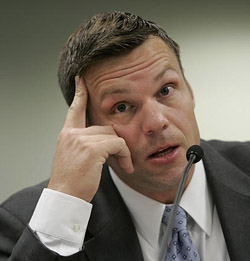
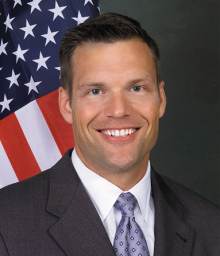
Kobach’s side work attacked in Kansas primary race


KOBACHKrisKobachKOBACH

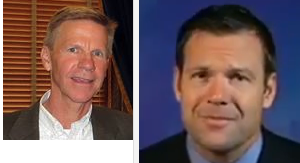
Morgan and Kobach
Morgan and Kobach

TOPEKA, Kan. (AP) — Secretary of State Kris Kobach’s challenger in the Kansas Republican primary is demanding that Kobach fully disclose his earnings from outside work by releasing his income tax records for the past three years.

GOP candidate Scott Morgan said Tuesday that voters deserve to know the extent of Kobach’s private financial dealings with other parties.

Kobach and his campaign spokeswoman did not immediately return telephone messages seeking comment.

Kobach is a former law professor who became nationally known for advising officials in other states on cracking down on illegal immigration.

Financial disclosures Kobach filed with the state show he’s had five private clients since taking office in 2011 and that he maintains an outside law firm.

But Morgan notes that the information in the state forms is limited.

Stolen property recovered in eastern Kansas

PoliceCARBONDALE, Kan. (AP) — An eastern Kansas sheriff says deputies have recovered a large amount of property reported stolen from several cities and counties.

The Osage County Sheriff’s Department says in a news release the items were found Monday at a Carbondale property where authorities investigating marijuana cultivation executed a search warrant. No arrests had been made as of Tuesday.

The Topeka Capital-Journal reports deputies recovered four enclosed trailers and four flatbed trailers along with other stolen items. The stolen goods were connected to burglaries and thefts reported to the Shawnee and Pottawatomie sheriff’s departments and to police in Topeka and Kansas City, Kansas.

Deputies also seized an undisclosed amount of controlled substances.

Ex-manager admits embezzling from credit union

embezzelmentTOPEKA, Kan. (AP) — A former manager of Jayhawk Federal Credit Union has pleaded guilty to embezzling more than $93,500 from the Lawrence institution.

The U.S. Attorney’s office says 42-year-old Topeka resident Karolyn Stattelman entered the plea Tuesday, less than five weeks after she was charged.

Federal prosecutors alleged in a criminal information that from late 2005 to early 2013, Stattelman obtained money orders from the credit union without paying for them, then altered its ledgers to hide the thefts.

Stattelman also admitted allowing a teller, 38-year-old Christi Marie Hout, to embezzle more than $81,000 from the credit union. Hout, of Lawrence, pleaded guilty last week to one count of theft.

Both women face up to 30 years in prison and fines of up to $1 million. Sentencing dates will be later.

Man Bound Over For Alleged Sex Abuse Of Infant

Jorge Fernandez-Molina
A St Joseph man on Monday was bound over for trial on sodomy charges for allegedly abusing a female child less than four years old. Police say the child was injured when the suspect fondled her genitals and buttocks.

Poice say 43-year-old Jorge Fernandez-Molina was responsible for the care, custody and control of the child victim at the time.

He’s being held under $50,000 bond awaiting trial July 7.

Brownback responds to lesser prairie chicken lawsuit

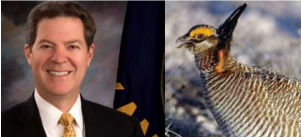
Screen Shot 2014-06-17 at 3.08.28 PMTOPEKA — Gov. Sam Brownback today issued the following statement in response to a lawsuit attempting to list the lesser prairie chicken as an “endangered” species:

“It is not surprising that these extremist environmental organizations would file a lawsuit in Washington, D.C., that effectively attempts to shut down the energy and agriculture economies of western Kansas.

“Their previous litigation is what caused the threatened listing of the Lesser Prairie Chicken in the first place. But it appears they are not satisfied with the multi-million dollar costs already imposed on Kansans – what they really seek is a level of economic devastation that would do nothing to enhance the species or its habitat.

“It is the governor’s job to protect the rights of Kansans and that is what I am doing. We will oppose this position and move forward with our own initiatives to reverse the unwarranted federal action.”


2014 Kansas notable books announced; which have you read?

Screen Shot 2014-06-17 at 2.58.53 PMState Library of Kansas

TOPEKA — The State Library of Kansas has announced 15 books featuring quality titles with wide public appeal, either written by Kansans or about a Kansas-related topic. The Kansas Notable Book List is the only honor for Kansas books by Kansans, highlighting our lively contemporary writing community and encouraging readers to enjoy some of the best writing of the authors among us.

A committee of Kansas Center for the Book Affiliates, Fellows, librarians and authors of previous Notable Books identifies these titles from among those published the previous year, and the State Librarian makes the selection for the final List. An awards ceremony will be held at the Kansas Book Festival, September 13, 2014, to recognize the talented Notable Book authors.
Throughout the award year, KCFB promotes all the titles on that year’s List electronically, at literary events, and among librarians and booksellers.

For more information about the Kansas Notable Book project, call (785) 296-3296, visit www.kslib.info/notablebooks or email infodesk@library.ks.gov.

2014 Kansas Notable Books

“Biting through the Skin: An Indian Kitchen in America’s Heartland”
by Nina Mukergee Furstenau

At once a traveler’s tale, a memoir, and a mouthwatering cookbook, Biting through the Skin offers a first-generation immigrant’s perspective on growing up in America’s heartland. Nina Mukerjee Furstenau’s parents brought her from Bengal in northern India to the small town of Pittsburg in 1964, decades before you could buy plain yogurt in American grocery stores. Embracing American culture, the Mukerjee family ate hamburgers and soft-serve ice cream. Her parents transferred the cultural, spiritual, and family values they had brought with them to their children only behind the closed doors of their home, through the rituals of cooking, serving, and eating Bengali food and making a proper cup of tea.

Through her journeys she learned that her family was not alone in being a small pocket of culture sheltered from the larger world.  This book shows how we maintain our differences as well as how we come together through what and how we cook and eat.

“The Black Country”
by Alex Grecian
The British Midlands. It’s called the “Black Country” for a reason. Bad things happen there. When members of a prominent family disappear from a coal-mining village—and a human eyeball is discovered in a bird’s nest—the local constable sends for help from Scotland Yard’s new Murder Squad. Fresh off the grisly 1889 murders of The Yard, Inspector Walter Day and Sergeant Nevil Hammersmith respond, but they have no idea what they’re about to get into. The villagers have intense, intertwined histories. Everybody bears a secret. Superstitions abound. And the village itself is slowly sinking into the mines beneath it. Not even the arrival of forensics pioneer Dr. Bernard Kingsley seems to help. In fact, the more the three investigate, the more they realize they may never be allowed to leave…

“Bleeding Kansas, Bleeding Missouri: The Long Civil War on the Border”
edited by Jonathan Earle and Diane Mutti Burke

Long before the first shot of the Civil War was fired at Fort Sumter, violence had already erupted along the Missouri-Kansas border—a recurring cycle of robbery, arson, torture, murder, and revenge. This multifaceted study brings together fifteen scholars to expand our understanding of this vitally important region, the violence that besieged it, and its overall impact on the Civil War. Bleeding Kansas, Bleeding Missouri blends political, military, social, and intellectual history to explain why the region’s divisiveness was so bitter and persisted for so long. By focusing on contested definitions of liberty, citizenship, and freedom, it also explores how civil societies break down and how they are reconstructed when the conflict ends.

“A Death at Crooked Creek: The Case of the Cowboy, the Cigarmaker, and the Love Letter”
by Marianne Wesson

One winter night in 1879, at a lonely Kansas campsite near Crooked Creek, a cowboy from Lawrence was shot to death. The case might have been soon forgotten- except for the $25,000 life insurance policies the cowboy had taken out shortly before his departure. The insurance companies refused to pay on the policies, claiming that the dead man was not John Hillmon, and the apparent widow, Sallie Hillmon, was forced to take them to court in a case that would reach the U.S. Supreme Court twice. The companies’ case rested on a crucial piece of evidence: a faded love letter written by a disappeared cigarmaker, declaring his intent to travel westward with a “man named Hillmon.”

In A Death at Crooked Creek, Marianne Wesson re-examines the long-neglected evidence, recreating the court scenes that led to a significant ruling on the admissibility of hearsay evidence. This engaging and vividly imagined work combines the drama, intrigue, and emotion of excellent storytelling with cutting-edge forensic investigation techniques and legal theory.

“Dragging Wyatt Earp: A Personal History of Dodge City”
by Robert Rebein

In Dragging Wyatt Earp essayist Robert Rebein explores what it means to grow up in, leave, and ultimately return to the iconic Western town of Dodge City. In chapters ranging from memoir to reportage to revisionist history, Rebein contrasts his hometown’s Old West heritage with a New West reality that includes salvage yards, beef packing plants, and bored teenagers cruising up and down Wyatt Earp Boulevard. Along the way, Rebein covers a vast expanse of place and time and revisits a number of Western myths, including those surrounding Francisco Vasquez de Coronado, the Cheyenne chief Black Kettle, George Armstrong Custer, and of course Wyatt Earp himself. Funny and incisive, Dragging Wyatt Earp is an exciting new entry in what is sometimes called the nonfiction of place.

“Echoes from the Prairie: A Collection of Short Memoirs”
edited by Nicole Muchmore

A modern memoir anthology by Kansas writers in the Great Plains Writers Group, Echoes from the Prairie consists of short creative non-fiction stories arranged in four sequential parts that begins by answering the question “Why write memoir?” The remaining parts are separated by the phases of life: childhood, transition to adulthood and adulthood. Many of these stories echo each other in pairs or clusters, often by subject, but also more subtly in voice and construction. This work displays the courageous perseverance of both unearthing memories and in artfully advancing the craft of personal writing.

“Edmund G. Ross: Soldier, Senator, Abolitionist”
by Richard A. Ruddy

Thanks to John F. Kennedy’s Profiles in Courage, most 21st century Americans who remember Edmund G. Ross (1826–1907) know only that he cast an important vote as a U.S. senator from Kansas that prevented the conviction of President Andrew Johnson of “high crimes and misdemeanors”, allowing Johnson to stay in office. But Ross was also a significant abolitionist, journalist, Union officer, and territorial governor of New Mexico. This first full-scale biography of Ross reveals his importance in the history of the United States. Ross’s life reveals a great deal about who we were as Americans in the second half of the nineteenth century. He was involved in the abolitionist movement as both a journalist and a participant, as well as in the struggle to bring Kansas into the union as a free state. His career also involved him in the expansion of railroads west of the Mississippi, the Civil War, Reconstruction, and the Gilded Age with its greedy politicians and businessmen. In short, Ross’s career represents the changes that the whole country experienced in the course of his lifetime.

“The Good Lord Bird”
by James McBride
Henry Shackleford is a young slave living in the Kansas Territory in 1857, when the region is a battleground between anti- and pro-slavery forces. When John Brown, the legendary abolitionist, arrives in the area, an argument between Brown and Henry’s master quickly turns violent. Henry is forced to leave town—with Brown, who believes he’s a girl. Over the ensuing months, Henry—whom Brown nicknames Little Onion—conceals his true identity as he struggles to stay alive. Eventually Little Onion finds himself with Brown at the historic raid on Harpers Ferry in 1859—one of the great catalysts for the Civil War. An absorbing mixture of history and imagination, and told with McBride’s meticulous eye for detail, The Good Lord Bird is both a rousing adventure and a moving exploration of identity and survival.

“Navigating Early”
by Clare Vanderpool

After his mother’s death at the end of World War II, Jack Baker’s father sends him from his home in Kansas to attend a boys’ boarding school in Maine. Jack doesn’t know what to expect. Certainly not Early Auden, the strangest of boys. Early keeps to himself, reads the number pi as a story, and refuses to accept truths others take for granted. Feeling lost and adrift, Jack connects with Early and the two become friends. During a break from school, the boys set out for the Appalachian Trail on a quest for a great black bear. As Jack and Early travel deeper into the mountains, they meet peculiar and dangerous characters, and they make some shocking discoveries. Jack’s ability to be a steadfast friend to Early will be tested as the boys discover things they never know about themselves and others. This Young Adult novel will challenge and astound readers as they navigate mysterious and uncharted lands.

“Needle in the Bone”
by Caryn Mirriam-Goldberg

Needle in the Bone tells the astonishing stories of Holocaust survivor Lou Frydman and former Polish resistance fighter Jarek Piekalkiewicz. As mere teenagers during World War II, the two men defied daunting odds, lost everything and nearly everyone in the war, and yet summoned the courage to start new lives. Captured by the German army during the Warsaw Ghetto uprising, Frydman survived six concentration camps and three death marches. Piekalkiewicz started his own underground army at age sixteen. After the war, Frydman and Piekalkiewicz began the long process of healing, taking different paths through the refugee camps of Europe, and then through university, marriage, and work, eventually leading them both to teaching positions at the University of Kansas, where they met in 1975. Recognizing the trauma and courage of each other’s experiences, they became best friends. By blending extensive interviews with the men, historical research, and the author’s own responses and questions, this emotionally stirring book provides a unique perspective on still-compelling issues, including the meaning of the Holocaust, the nature of good and evil, and how people persevere in the face of unbearable pain and loss.

“Of Grave Concern: An Ophelia Wylde Paranormal Mystery”
by Max McCoy

The Civil War is over, and many a young widow has turned to spiritualism to contact their husbands on “the other side.” But Ophelia Wylde won’t be fooled twice. After wasting her money on a phony psychic, she decides if she can’t beat ‘em, join ‘em. She heads West, selling her services as a spiritual medium who speaks to the dead. By the time she reaches Dodge City, business is booming. Except for a handsome but skeptical bounty hunter named Jack Calder, no one suspects Ophelia of running a con game–until an unfortunate “reading” exposes her to a town full of angry customers. As punishment, the mob drags Ophelia to Boot Hill and buries her alive in a fresh grave overnight. That’s when the dead start speaking. To her. For real. And for dead people, they’ve got lots to say. . .

“Teatime to Tailgates: 150 Years at the K-State Table”
by Jane P. Marshall

To celebrate K-State’s sesquicentennial, the College of Human Ecology published a book about the university’s rich food heritage featuring stories and recipes from 1863 to 2013. The book encompasses the entire university, from Call Hall’s ice cream parlor to Van Zile’s dining room, from Cowboy Cabbage cooked in a cast iron pan to the union’s Crown rolls. Much of the information for this book came from archives, diaries, newspapers and historical journals- demonstrating the link between the school and the business of feeding the world. Many of the recipes are accompanied by historical anecdotes, narratives and historic photos. It’s the story of homesteaders and wheat fields, cowboys and steak, test tubes and textbooks.

“The Thing About Luck”
by Cynthia Kadohata

Summer knows that kouun means “good luck” in Japanese, and this year her family has none of it. Just when she thinks nothing else can possibly go wrong, an emergency whisks her parents away to Japan—right before harvest season. Summer and her little brother, Jaz, are left in the care of their grandparents, who come out of retirement in order to harvest wheat and help pay the bills. Having thoroughly disappointed her grandmother, Summer figures the bad luck must be finished—but then it gets worse. And when that happens, Summer has to figure out how to change it herself, even if it means further displeasing Obaachan. Because it might be the only way to save her family.

“The Tie That Bound Us: The Women of John Brown’s Family”
by Bonnie Laughlin-Schultz

John Brown was fiercely committed to the militant abolitionist cause. Less well known is his devotion to his family, and they to him. The commitment of his wife, daughters and daughters-in-law to his cause and their crucial roles in preserving and transforming his legacy after his death often goes unacknowledged. Brown’s wife, daughters, and daughters-in-law were in many ways the most ordinary of women, contending with chronic poverty and lives that were typical for poor, rural nineteenth-century women. They also lived extraordinary lives, crossing paths with such figures as Frederick Douglass and embracing an abolitionist moral code that sanctioned antislavery violence in place of the more typical female world of pamphleteering.

In the aftermath of Brown’s raid at Harpers Ferry, these women experienced a particular kind of celebrity for their roles as “relics” of Brown’s raid.  Because of their position as symbols of the most radical form of abolitionist agitation, the story of the Brown women illuminates the changing nature of how Americans remembered Brown’s raid, radical antislavery, and the causes and consequences of the Civil War.

“Worth the Pain: How Meningitis Nearly Killed Me – Then Changed My Life for the Better”
by Andy Marso

Born at the beginning of the millennial or “me-first” generation, Andy Marso grew up believing he was smart, talented and entitled to his dreams. He coasted through school with minimal effort, but weeks before he entered the “real world,” Marso was struck down by a bacterial infection that changed everything. In this first-person narrative, Marso, a professional journalist who has written for the Washington Post and the Topeka Capital-Journal, details a transformative months-long hospitalization in which he fights for his life and then his limbs. By the time he leaves the hospital, Marso will face a choice: continue to grasp futilely at the easy, comfortable life he knew, or embrace a new life more challenging than he ever imagined.

Gasoline Prices Continue To Rise

Prices 140617Crude oil prices are starting to level off after spiking on concerns over the insurgency in Iraq, but wholesale gasoline prices continue to rise, right along with prices at the pump. We spotted prices jumping about another dime a gallon to $3.49 at most stations in St Joe, and as high as $3.54 at one retailer.

The average cost to fill your 15-gallon tank is $52.06, nearly two dollars higher than last week, according to AAA. The national average jumped to $3.664/gallon Tuesday morning.

That’s up two tenths of a cent on the day and nearly two cents higher than a week ago.

Missouri prices averaged $3.462, up nearly a penny from Monday and a nickel higher than last week. The average in Kansas is $3.496, more than two cents higher than Monday.

Copyright Eagle Radio | FCC Public Files | EEO Public File